Skip to content




A hurricane is a day or two out and the air conditioner is running fine. Does cutting its power protect it, or just make the house miserable? Guess wrong and a surge can burn out the compressor, the most costly part of the system. Here is what to do, and in what order.
Should You Turn Off Your Air Conditioner Before a Hurricane?
Yes. Turn the air conditioner off before the hurricane arrives. For a running system, the bigger risk is electrical, because the power grid drops out and surges back, often more than once. A few hours without cooling costs you comfort. A surge through a running system can cost you the compressor.
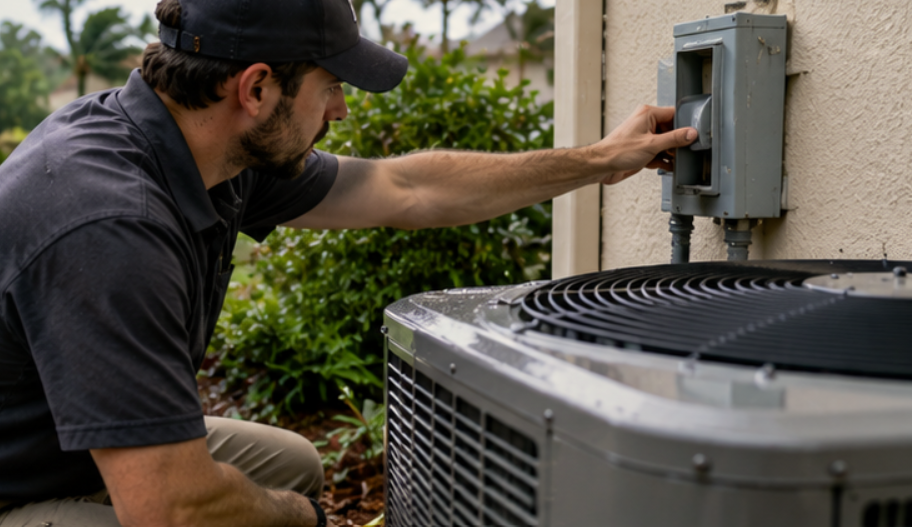
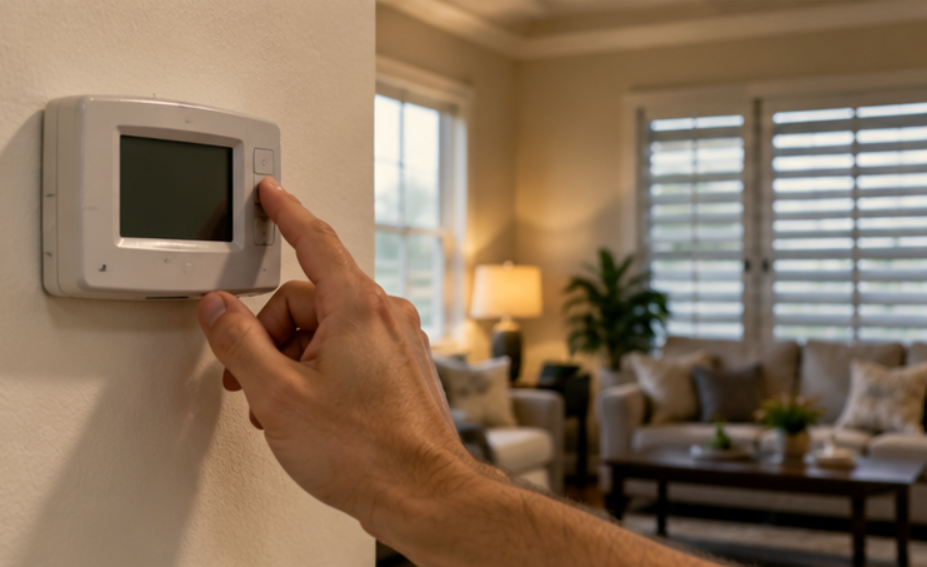
The order matters as much as the decision. Set the thermostat to off so the system is not mid-cycle, then go to the panel and flip the dedicated breaker that feeds the outdoor unit. That second step is what actually disconnects the condenser from the incoming power line.
Timing matters too. Shut it off when the first rain bands reach Oviedo, not when the lights start to flicker, since flickering means the surges have already started. Run the system a few degrees cooler that morning, and the house holds some of that cool air into the storm.
Why Does Turning Off the Air Conditioner Before a Hurricane Matter?
A central air conditioner is two linked machines. The indoor air handler moves cooled air through the house, and the outdoor condenser releases heat outside. The condenser sits in your yard, exposed to blowing debris, rising water and every spike that travels down the utility line. That makes it the part a storm damages most.
Cutting power for a few hours costs you nothing. A burned-out compressor is one of the biggest repair bills an air conditioner can run up, and a five-minute shutdown is what stands between the two.
Put simply, you trade one warm evening for the safety of the compressor, instead of betting it on how the grid behaves.
How Do Power Surges Damage Your Air Conditioner?
A surge is a short spike in voltage, far above the 240 volts an outdoor unit is built for. During a storm it tends to hit at two moments, and it damages the parts below.
Power Surges During Outages and Power Restoration
The first moment is when lines go down and power drops in and out. The second is when crews restore service, and power comes back in bursts as each circuit returns. A system that is off at the breaker sits out both.
Compressor and Capacitor Damage
The compressor pumps refrigerant through the system, and the capacitor gives the compressor and fan motor the boost they need to start. A surge can burn out either one. A failed capacitor is a quick repair. A burned compressor is a major one, and on an older system it can mean replacing the whole unit.
Control Board Damage From Lightning
Lightning does not have to strike your house to send a surge through its wiring. Newer air conditioners run on a control board that times the compressor, the fan and the safety switches. A surge can fry that board, and the system will not start even though the compressor is fine.
Summer Thunderstorms and Ongoing Surge Risks
Surges do not wait for a named storm. Oviedo’s summer thunderstorms bring them too, which is why power surges happen more often during summer storms. A whole-home surge protector at the electrical panel limits the spikes that reach your air conditioner and other appliances.
A surge protector still does not replace the shutdown. It cannot stop floodwater or flying debris, and a direct lightning strike can overwhelm it. For a hurricane, use both, and leave the system off until the storm has passed and power is steady.
How Do You Safely Shut Off the Air Conditioner Before a Storm?
The whole shutdown takes about ten minutes, and none of it needs tools. Do it in daylight, before the wind picks up, so you are not reading breaker labels by flashlight.
Follow this order when a storm is on the way:
- Set the thermostat to off: This ends the cooling cycle so the compressor is not running when power is cut.
- Find the dedicated condenser breaker: It is usually a double-wide breaker labeled for the air conditioner, condenser or heat pump.
- Switch that breaker off: This disconnects the outdoor unit from incoming utility power and the surges riding on it.
- Clear debris around the condenser: Remove branches, furniture, and loose yard items that wind can throw into the fins.
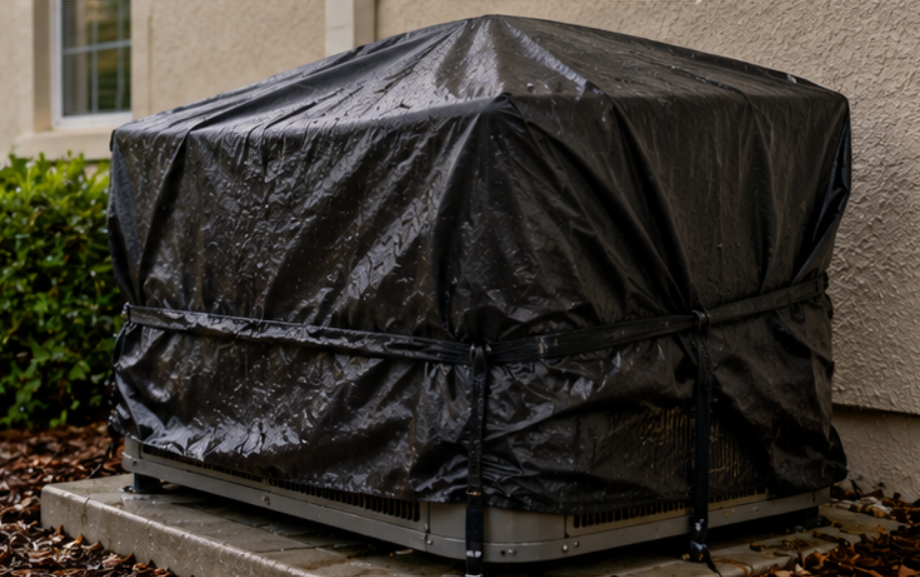
- Leave the unit uncovered: It is built for weather, and a tight cover traps moisture against the coil.
Before you close the panel door, take a photo of it with the breaker labels showing. When it is time to restart, the photo saves you from guessing which switch is which.
How Does the Local Storm Season Change What You Should Do?
Oviedo’s storm season is also its rainy season. NOAA climate normals for the Sanford airport, the closest station, show 28.5 inches of rain from June through September, more than half the year’s 49.6 inches. Those wet months sit inside the June 1 to November 30 hurricane season, so surges stay a risk for half the year.
Flooding is the second local factor. Many condensers here sit on a slab at ground level, and in low-lying yards they can end up in standing water. In 2022, Hurricane Ian flooded parts of Oviedo near the Econlockhatchee River, and floodwater does not care that the power is off at the breaker.
Once water reaches the unit, it works into the wiring and the fan motor bearings. You will not see that damage until you try to run it again, so a unit that sat in floodwater needs an air conditioner repair check before it runs.
Living here changes the answer in two ways. A season this long means you may run the shutdown more than once a year. And with flood risk, turning the system back on becomes a judgment call, not an automatic step.
When Is It Safe to Turn the Air Conditioner Back On After the Storm?
Wait until power has held steady for roughly 15 to 30 minutes before restoring the breaker. Utility power often flickers and surges repeatedly in the first minutes after restoration, and each of those spikes is another chance to damage the compressor you just protected. That short wait costs you nothing and protects everything the shutdown saved.
Before you restore power, walk around the outdoor unit. Look for a water line on the cabinet, bent fins or debris inside the fan cage, and leave the breaker off if you find any of them.
Check the panel only from a dry spot, and never open or touch it if water reached it. If your electrical panel shows signs of water or storm damage, restoring power can turn a wet part into a failed or dangerous one.
Check these before you flip the breaker back on:
- Stable power: No flickering since the power came back
- Dry condenser: No standing water around or inside the outdoor unit
- Dry panel: No water marks or rust on or around it, seen from a dry spot
- No debris damage: Fins and wiring intact, nothing struck or bent
If anything on that list fails, or the system smells of burning when it starts, switch the breaker off again and leave it off. A wet unit or panel needs a technician’s check before it runs, not another try.
Why Choose R&A Industries in Oviedo, FL?
A storm puts your air conditioner and your electrical panel at risk at the same time, and checking both usually takes two trades. R&A Industries does air conditioning, electrical and plumbing work under one roof, so one visit from our Oviedo team covers the outdoor unit, the panel and the surge risk between them.
That same visit can add a whole-home surge protector at the panel, so the next summer thunderstorm meets protection already in place. Members of our Gold Preventative Maintenance Plan also get priority scheduling, which matters most in the days after a storm, when every phone in town is ringing.
Hurricane season runs through November 30, so there is still time to get a check in before the next storm. Call (407) 384-0034 to book your visit.
Frequently Asked Questions
Can I run my air conditioner on a portable generator after a hurricane?
Many portable generators cannot start a central air conditioner, because the compressor pulls a big burst of power at startup. A whole-house generator sized for the home can. Never connect a portable generator by plugging it into a wall outlet, since that can send power back down the utility line.
Should I strap down my outdoor unit before a hurricane?
Usually it is already done. The Florida Building Code requires outdoor equipment to be secured against wind, so newer installs are anchored to the pad. Check that the straps are tight and the bolts are not rusted through. If the unit sits loose, have it anchored properly instead of tying it down yourself.
Why is my air conditioner not cooling after the power came back?
Give it a few minutes. Many systems wait up to five minutes after an outage to protect the compressor, and some thermostats lose their settings. If it still is not cooling after 15 minutes with the thermostat set right, a surge may have hit the capacitor or control board, so call for service.
Should I turn off my air conditioner during a thunderstorm?
A passing thunderstorm does not call for a full hurricane shutdown, and a whole-home surge protector handles most everyday spikes. If lightning is close and the lights keep flickering, turn the system off at the breaker until the storm moves on. Flickering power is the same surge risk the hurricane shutdown is meant to avoid.
Should I turn off my water heater and other appliances before a hurricane?
Turn off the breakers for large electric appliances, such as an electric water heater or pool pump, since a surge can damage them too. Keep the refrigerator running while you have power. Leave the gas on unless officials tell you to shut it off, because a professional has to turn it back on.