Skip to content



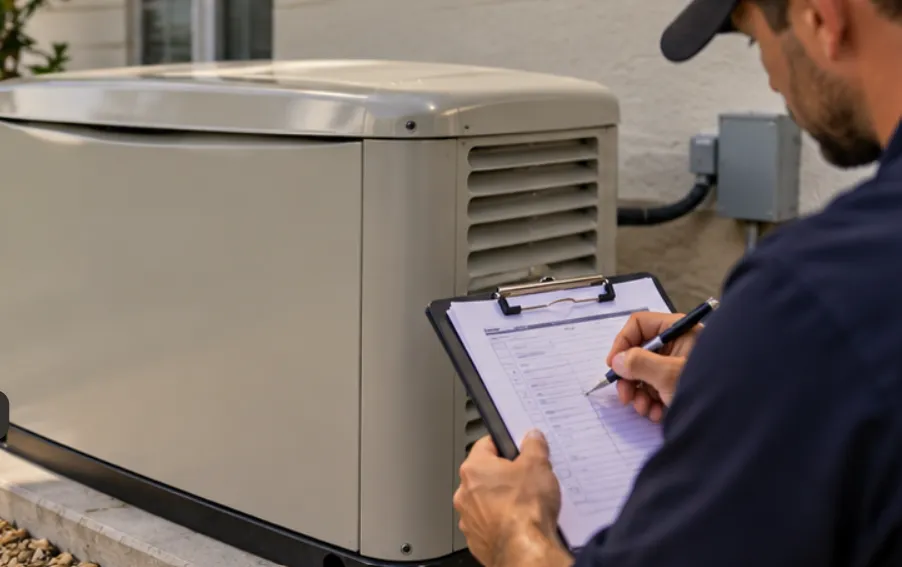
A whole-home generator can sit quiet in the yard for months and still refuse to start the night a storm takes out the power, and nothing about how it looks warns you. The cause is usually something a routine service catches, like a tired battery or old oil.
Service a home standby generator at least once a year, ideally in spring before hurricane season opens on June 1. If a long outage keeps it running for days, book an oil and filter change soon after, because heat and long run times wear oil out faster here than a yearly visit assumes.
How Often Should a Standby Generator Be Serviced in Florida?
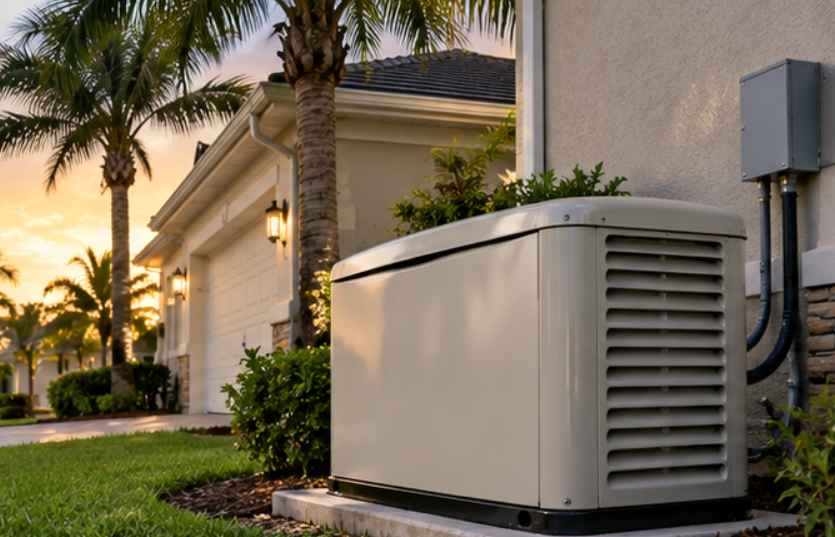
Most standby generators should receive professional generator service at least once per year, even if they never ran during an outage. Oil breaks down with time and heat, batteries lose charge sitting idle, and seals dry out. Annual service is the baseline that keeps those slow failures from surfacing on a storm night.
In Central Florida, that annual figure is a floor and not a ceiling. Frequent summer showers and thunderstorms drive outages well beyond any named storm, so a unit here starts and runs more often than one in a cooler, drier climate. That puts hours on the engine faster.
Heat shortens the schedule too. Generac tells owners that a unit running long stretches in heat above 85°F needs new oil and a new filter every 100 hours. The Sanford airport weather station, the closest NOAA site to Oviedo, logs about 115 days a year at 90°F or hotter, so plan around that shorter interval here.
When Should You Schedule Generator Service Before Hurricane Season?
Spring is the window, before June 1. Florida’s hurricane season spans roughly six months, June 1 through November 30, and summer thunderstorms cause outages well before any tropical system is named. Service done in April or May means a weak battery or a worn part gets found while the power is still on.
Waiting past June 1 costs you. Once storms begin, service calls stack up and parts can run short, so a unit that needed a battery in May may sit unfixed in August.
If you are reading this mid-season, do not wait for spring. A unit that ran through an outage this year, or has gone more than a year without service, should be checked now. The season runs through November 30, and Hurricane Nicole came ashore on Florida’s east coast on November 10, 2022.
What Does a Professional Generator Service Include?
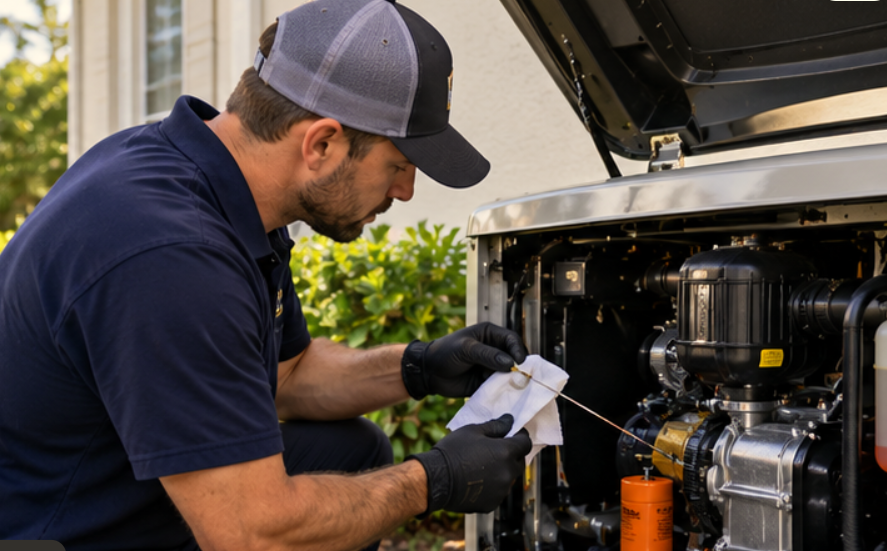
A full service is more than starting the unit to see if it runs. It covers five areas, and the manufacturer’s schedule for your model sets the details.
Oil, Filter and Spark Plugs
Engine oil is drained and replaced along with the oil filter, and the spark plugs are inspected and regapped or swapped. Old oil loses its protective film and lets the engine wear under load. Fouled plugs cause hard starts and rough running, which is exactly the behavior you do not want when the house swings onto the generator.
Battery and Charging System
The battery is load-tested, not just eyeballed, and the terminals are cleaned and checked for corrosion. A battery can read full voltage sitting still yet collapse the moment the starter draws current. The charger that keeps it topped up between runs is verified too, since a dead charger quietly drains the battery over months.
Fuel System and Connections
Fuel lines, regulators and connections are inspected for leaks, cracks and pressure drop. On natural gas or propane units, a regulator that cannot hold pressure under full load starves the engine the instant the whole house comes on. Loose or weathered fittings are a common find in Florida’s humid air and get tightened or replaced.
Run-Under-Load Test
A thorough service includes a run-under-load test, not just an idle start. The unit is brought up to operating temperature and made to carry your home’s actual load, which is the only check that proves it can do its job. An engine that idles fine can still stumble under load from a weak battery, low fuel pressure or a tired component.
Transfer Switch and Controls
The automatic transfer switch is inspected for pitted contacts, loose lugs and heat damage, and the control board and sensors are checked. This is the device that hands the house from utility power to generator power. If it fails, the engine can run perfectly and your lights still stay off, so it is tested as part of the whole system.
Use this list when you book. Ask which of the five areas the visit covers, and you will know exactly what you are paying for.
What Does Run Time During an Outage Do to the Service Schedule?
Run hours, not just the calendar, decide when the oil is due. A generator that sits idle most of the year may go twelve months on one oil change. One that runs through a five-day outage logs about 120 hours, which is past the 100-hour heat interval in a single storm.
Many standby controllers show total run hours on the screen, so check the number after every outage. A few things push those hours up faster than the calendar does.
- A multi-day outage: sustained run time can pass a full oil-and-filter interval in one storm
- Heavy electrical load: more of the house on the generator means more fuel burned and more engine hours
- Frequent transfer-switch cycling: short, repeated starts add wear the calendar never shows
- High ambient heat: Central Florida summers push the engine harder and age the oil faster
That is why a unit that ran fine through a hurricane can need an oil change right after it. Running on worn-out oil shortens engine life. Pair that visit with a post-storm electrical panel check, since a multi-day run stresses the whole electrical system, not only the generator.
Why Do Standby Generators Fail to Start When You Need Them?
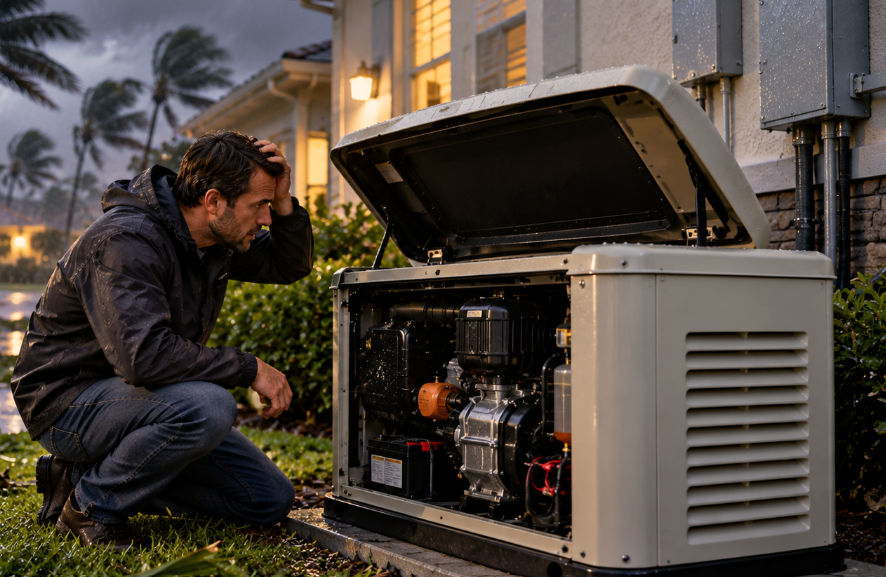
A generator that will not start, or will not carry the house, usually has one of four problems.
A Weak or Dead Starting Battery
Heat speeds up battery wear, so a battery that started the unit in spring can fall short by August. Its age matters as much as its last test. Write the install date on the battery, and replace it on the schedule in your owner’s manual instead of waiting for a no-start.
Low Propane or Fuel Supply Problems
Home standby units run on natural gas or propane, so stale gasoline is a portable-generator problem. On propane, the risk is the tank itself. Check the gauge at the start of the season and top it up when a storm is forecast, since deliveries stop once the weather turns.
Clogged Air Filters and Blocked Ventilation
Leaves, grass clippings and storm debris can clog the air filter or block the vents around the cabinet. Florida’s long growing season keeps that debris coming, and an engine that cannot breathe or shed heat may shut itself down partway through an outage.
Engine Runs but the House Stays Dark
Sometimes the engine runs and the lights stay off. That points to the transfer switch, the controls or the wiring between them, and only testing finds it. Our electricians test that equipment on a service visit, and our emergency electrician in Oviedo team takes the urgent calls.
Call for service if the unit starts unevenly, shows a warning light or fails to pick up the house during its test. Finding the fault on a calm day is far easier than finding it in the dark.
What Can You Check Yourself Between Professional Visits?
A few checks are safe for a homeowner and worth doing between services. Oil, filter, fuel and load testing cross into engine and electrical work and belong to a technician, but the basics below take minutes.
- Confirm the weekly self-test runs: Watch the exercise cycle start and run so you know the engine and battery stay conditioned.
- Check the oil level: With the unit cool and switched off so it cannot start on its own, pull the dipstick and confirm the level sits in range.
- Inspect the battery: Look for white or green corrosion on the terminals and any loose connections.
- Keep the cabinet clear: Rake leaves, clippings and grass away from the vents and intake.
- Listen during the test: A rough or hesitant start on the no-load test is worth reporting before the season.
Power surges are the other risk between visits. When the grid comes back after an outage, the voltage can spike, and whole-home surge protection guards the generator’s controls and your appliances alike.
These checks catch the obvious problems, but they do not replace the load test and internal inspection a service provides. Keep a simple log of run hours and dates so you know when the next visit is genuinely due. A generator proven on a calm day in May is one you do not have to worry about in July.
Why Choose R&A Industries for Generator Service in Oviedo?
Generator service draws on electrical work, the first trade R&A Industries offered. Our Oviedo team services the engine, the transfer switch and the panel it feeds, so one company answers for your whole backup system.
If you need a new backup system rather than service on an old one, our team handles whole-home generator installation, from sizing the unit to wiring the transfer switch. Financing at 0% through Wisetack is available for qualified customers.
If your generator ran this season, or has gone a year without service, call (407) 384-0034 and we will get it checked before the next outage.
Frequently Asked Questions
Will my standby generator start automatically when the power goes out?
Yes. With an automatic transfer switch, a standby generator senses the outage, starts itself and moves your circuits over within seconds, whether you are home or away. That only works if the unit is left in auto mode, so check the setting after every service visit.
Can a standby generator run during a hurricane?
Yes. A standby generator sits in a weather-rated cabinet built to run outdoors through wind and rain. Floodwater is the limit. If water reaches the cabinet, stay away from it until the storm passes, and have it inspected before it runs again.
How long can a home standby generator run without stopping?
On natural gas, it can run as long as the gas keeps flowing, but it still needs short breaks. Generac tells owners to shut a unit down every 24 hours during a long outage to check the oil. On propane, run time also depends on how full the tank is.
Should I turn off my generator when the power comes back?
No. The automatic transfer switch moves your home back to utility power on its own, and the engine runs a short cool-down before it shuts off. If the generator keeps running long after the lights are back on, call for service, since the switch may not be transferring.
Do I need a permit to install a standby generator in Oviedo?
Yes. A standby generator ties into your electrical panel and usually a gas line, so it needs permits and an inspection from the local building department. Inside city limits that is the City of Oviedo, and in unincorporated areas it is Seminole County. Your installer normally pulls the permits as part of the job.