Skip to content



The first cool evening arrives in Oviedo, you turn on the heat, and a strange smell spreads through the house. Is it dust burning off after months of rest, or gas leaking from the furnace? One fades on its own. The other means everyone needs to get outside now.
If you smell rotten eggs, leave the house right away and call 911 or your gas utility’s emergency line once you are outside. Do not flip switches, use your phone indoors or hunt for the leak. Everything else in this guide comes second to that step.
Is the Gas Smell When My Heat Turns On Dangerous or Normal?
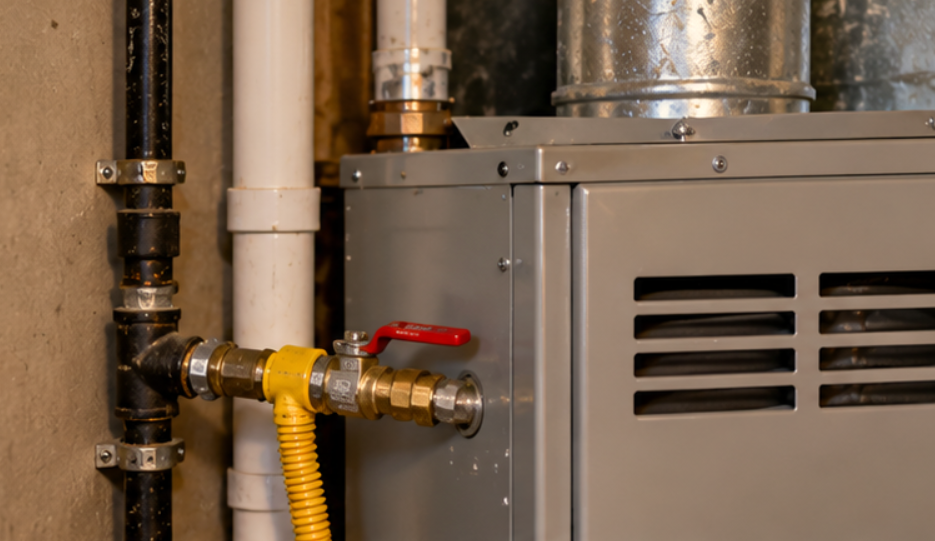
The kind of smell tells you which one you have. A dusty, slightly scorched smell that fades after the first run or two is dust burning off parts that sat idle all summer. A rotten-egg or sulfur smell is different, and you should treat it as a gas leak every time, even when it seems faint.
Natural gas and propane have no smell of their own. Suppliers add an odorant called mercaptan so a leak smells like rotten eggs. That smell is a warning, not a gauge, since it cannot tell you how much gas is in the room, so a faint whiff gets the same response as a strong one.
Some dangers have no smell at all. Carbon monoxide from a faulty furnace is odorless, so a house that smells fine is not proof the furnace is safe. A working carbon monoxide alarm near the bedrooms is how you catch it.
What If Your Home Uses a Heat Pump Instead of a Gas Furnace?
Most Oviedo homes heat with an electric heat pump, not a gas furnace. A heat pump moves heat with electricity and refrigerant and burns no gas at all. So if you smell gas when it starts, the smell is coming from somewhere else in the house.
The usual sources are a gas water heater, range, dryer or fireplace, or the piping that feeds them. The heat pump’s blower can pull that smell through the ducts, so it seems to start with the heat.
An electric heating system does not rule out a gas leak, so the rule stays the same. Leave first and call from outside.
How Do I Tell a Gas Leak From a Normal Startup Smell?
Match what you notice to one of the four patterns below. If you cannot tell which one it is, act as if it is gas.
Rotten-Egg or Sulfur Odor
This is the one smell that means leave now. It may be strongest near the furnace closet, the water heater or the stove, but you do not need to find where it is coming from before you act.
Brief Dusty Smell During the First Heating Cycle
Oviedo homes run the air conditioning for most of the year, so the heat may sit unused for eight or nine months. Dust settles on the burners, the heat exchanger or the electric heat strips in that time. The first run burns it off, and the smell should be mild, clearly dusty and gone after a cycle or two.
A smell that grows stronger, lasts past the first few cycles or comes back every time the heat runs is not dust. Turn the system off at the thermostat and have it checked. Clearing that dust is part of a furnace tune-up in Florida, so a tuned system starts with little or no smell.
Persistent Exhaust or Burning Odor
A smell like car exhaust points to a venting or combustion problem in a gas furnace, such as a blocked flue or a damaged heat exchanger. A sharp burning-plastic smell points to an overheating motor or wire instead. Both need a repair visit, and neither one fixes itself.
Turn the system off at the thermostat and book an inspection. If a carbon monoxide alarm sounds, or anyone has a headache, dizziness, nausea or confusion, get everyone outside and call 911.
Hissing Near the Furnace or Gas Line
A hiss near a gas line or appliance can mean gas is escaping, even before you smell it. Do not go closer to listen, and do not try to tighten a fitting. Treat it the same way as the rotten-egg smell and leave.
When Should You Evacuate and Who Should You Call First?
Leave the moment you smell rotten eggs or hear a hiss near a gas line, and make the call from outside. These five steps keep everyone safe until help arrives.
Follow these steps if you suspect a gas leak:
- Leave the building immediately. Get everyone outside and move a safe distance away.
- Avoid ignition sources. Do not operate switches, use electrical devices inside, light flames, or start a vehicle in an attached garage.
- Do not troubleshoot the furnace. Avoid relighting burners, touching valves, or attempting to shut off the appliance.
- Call from a safe location. Contact 911 or your gas utility’s emergency line and follow their directions. If your home runs on propane, call your propane supplier as well.
- Wait for clearance. Do not re-enter until emergency personnel or the utility confirms it is safe.
Who you call second matters too. Once the utility makes the area safe, the leak still has to be found and fixed before the heat goes back on. Our plumbers handle gas leak detection in Oviedo, checking each appliance connection, pressure testing the line when needed and repairing it once the leak is found.
If the leak traces back to the furnace, our heating technicians take it from there. Do not restart the furnace just because the smell has faded, since a leak can still be there after the odor is gone.
How Can You Prepare Your Heating System for the Next Cool Spell?
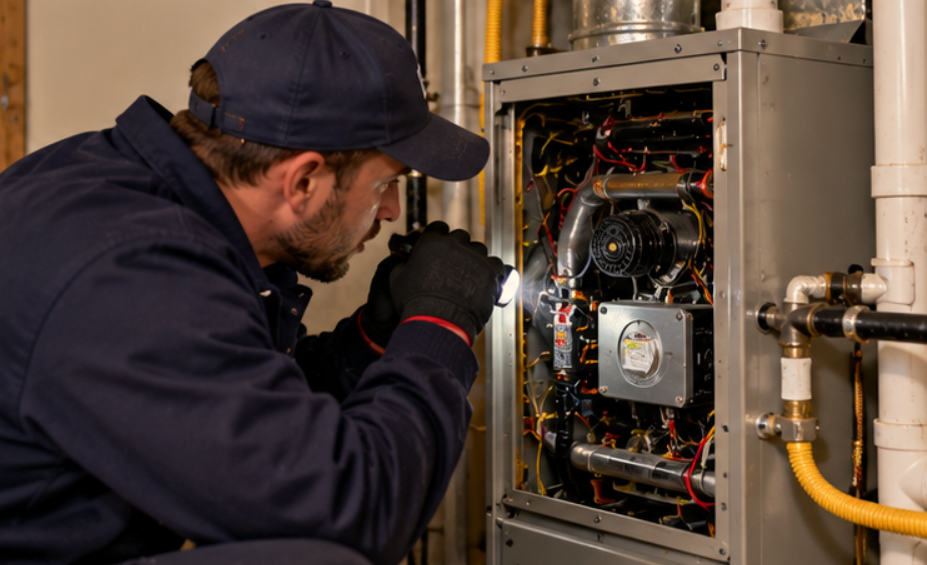
A few minutes of prep in November means fewer surprises on the first cold night. You can handle the simple checks yourself, and leave gas connections, burners and wiring to a technician.
Before the heating season:
- Replace the thermostat batteries if it uses them.
- Inspect the air filter and replace it when needed.
- Keep supply registers and return grilles unobstructed.
- Look for visible damage around accessible equipment without opening panels.
- Book furnace maintenance in Oviedo if the system has not had a visit in the past year.
- Test your carbon monoxide and smoke alarms.
Then run the heat for a few minutes on a mild afternoon, before the first cold night. Any dust burns off while the windows can be open, and you find out early if something smells wrong.
Why Choose R&A Industries for Heating and Gas Leak Concerns in Oviedo?
A gas smell can trace back to the line, the furnace or another appliance, and sorting out which one often takes more than one trade. At R&A Industries, our plumbers and heating technicians work side by side, so the person who finds the leak and the person who checks the furnace answer to the same company.
Our family-owned team has worked on Central Florida homes since 2001, from our base in Oviedo. If the furnace turns out to be the cause, our furnace repair technicians find the fault and fix it before the heat goes back on.
If you smell gas right now, leave the house and call 911 or your gas utility first. Once the area is safe, call R&A Industries at (407) 384-0034, and we will take it from there.
Frequently Asked Questions
Does a carbon monoxide detector detect natural gas?
No. A carbon monoxide alarm only senses carbon monoxide, the odorless gas from poor combustion. Natural gas and propane need an explosive-gas alarm, and some combination units do both. If your home has gas appliances, a combination alarm near the furnace and another near the bedrooms cover both risks.
Can a gas leak make you sick?
Yes. Breathing natural gas at high levels can cause headaches, dizziness, nausea and tiredness, because it pushes oxygen out of the air. The bigger danger is fire, since one spark can ignite it. If anyone feels unwell and you smell gas, get everyone outside and call 911.
Who pays to fix a gas leak in my house?
In most cases, the gas utility owns the line up to the meter, and the homeowner owns the piping from the meter to each appliance. A leak on your side is a repair you arrange with a licensed plumber. Your utility can tell you exactly where its part of the line ends.
Can a cracked heat exchanger cause a gas smell?
Not usually a rotten-egg smell. A cracked heat exchanger leaks exhaust, which can smell sharp or like car fumes, and it can release carbon monoxide, which has no smell at all. If you suspect one, stop using the furnace and have it inspected before the next cold night.
Should I open the windows if I smell gas?
Only if one is right beside you on your way out. Walking through the house to open windows keeps you inside longer, and getting everyone outside matters more than airing the house. The gas utility will ventilate the home once it is safe to go back in.