Skip to content




Can a Plumbing Inspection Find Leaks After Florida’s Rainy Summer?
After months of heavy Florida rain, it can be difficult to tell whether a damp wall, musty odor, ceiling stain, or unexplained moisture is coming from the weather or from a plumbing leak inside your home. In Oviedo, saturated soil and persistent humidity can make that distinction even harder, especially when a slow leak has been developing behind a wall or beneath the slab.
A plumbing inspection can help separate those two possibilities. Instead of assuming every moisture problem is caused by rainfall, a technician can look for unexplained water loss, changes in pressure, hidden moisture, and other signs that point toward a plumbing problem. If something still looks or smells wrong after the rain has passed, understanding what an inspection can uncover may help you find a leak before it causes more damage.
What Does a Rainy Season Actually Do to Residential Plumbing?
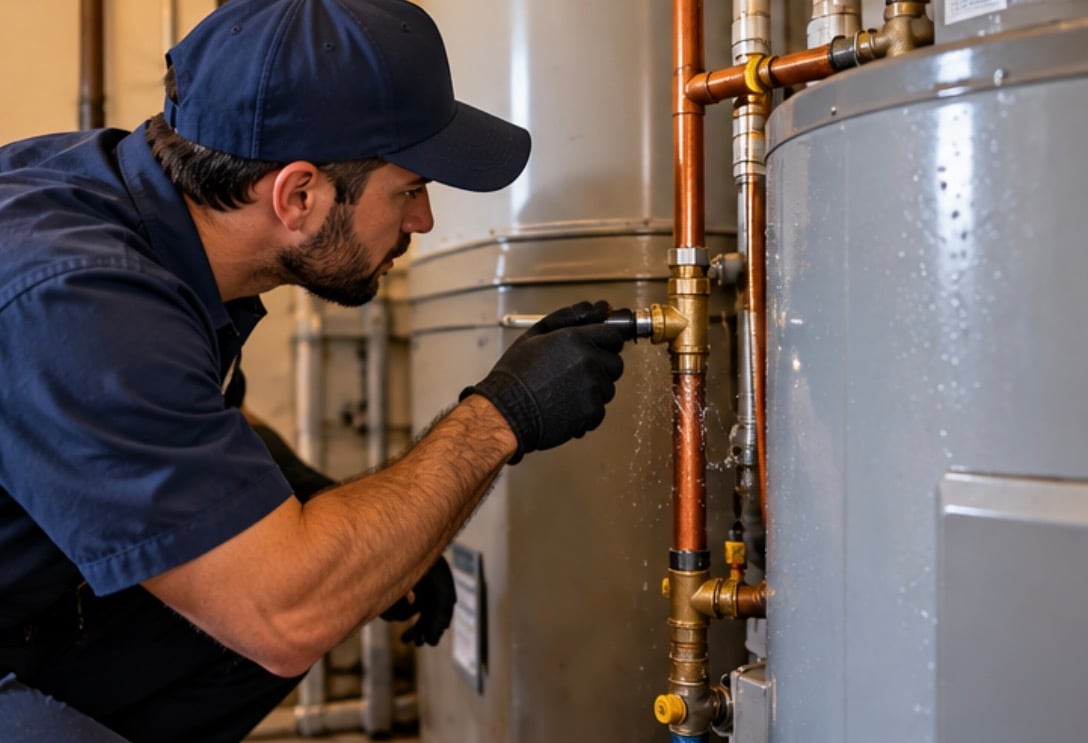
Heavy seasonal rain does not usually cause plumbing failures on its own. What it does instead is mask them, by producing damp patches, staining and musty smells that look almost identical to what a slow indoor leak produces over the same period.
There is a second effect worth knowing about. Saturated ground shifts, and ground movement around a slab or a buried supply line can stress joints that were previously sound, which is why some leaks genuinely do appear after a wet summer.
The combination is awkward. The season both hides existing leaks and occasionally creates new ones, which means the end of the wet months is a sensible point to establish which of the two you are dealing with.
Which Signs Suggest a Leak Rather Than Seasonal Damp?
Weather and plumbing produce heavily overlapping symptoms, but they differ in pattern rather than in appearance. Where the damp shows up, and whether it persists once the rain has stopped for a week, usually separates the two before anyone brings out any equipment.
The signs below are the ones that point toward plumbing rather than groundwater. Any single one can be explained away, but two together are worth investigating properly.
| What You Notice | What It Usually Points To |
|---|---|
| Damp that persists through a dry week | Plumbing rather than weather, since groundwater damp recedes. |
| A warm spot on a tile or concrete floor | A hot water line leaking beneath the slab. |
| Water pressure that has dropped gradually | A supply side leak somewhere between the meter and the fixtures. |
| The sound of running water with everything off | A leak downstream of the meter, often inside a wall or slab. |
| A water bill higher than the season explains | Continuous loss somewhere in the system, however small. |
| Cracking or lifting in a floor over concrete | Possible slab leak, where escaping water is moving the slab. |
The two rows involving floors matter most in this area, because slab-on-grade construction is common across Central Florida. A leak under a slab has nowhere obvious to surface, so it frequently shows as heat, sound or a bill before it ever shows as water.
What Makes a Hidden Leak Hard to Find Without Equipment?
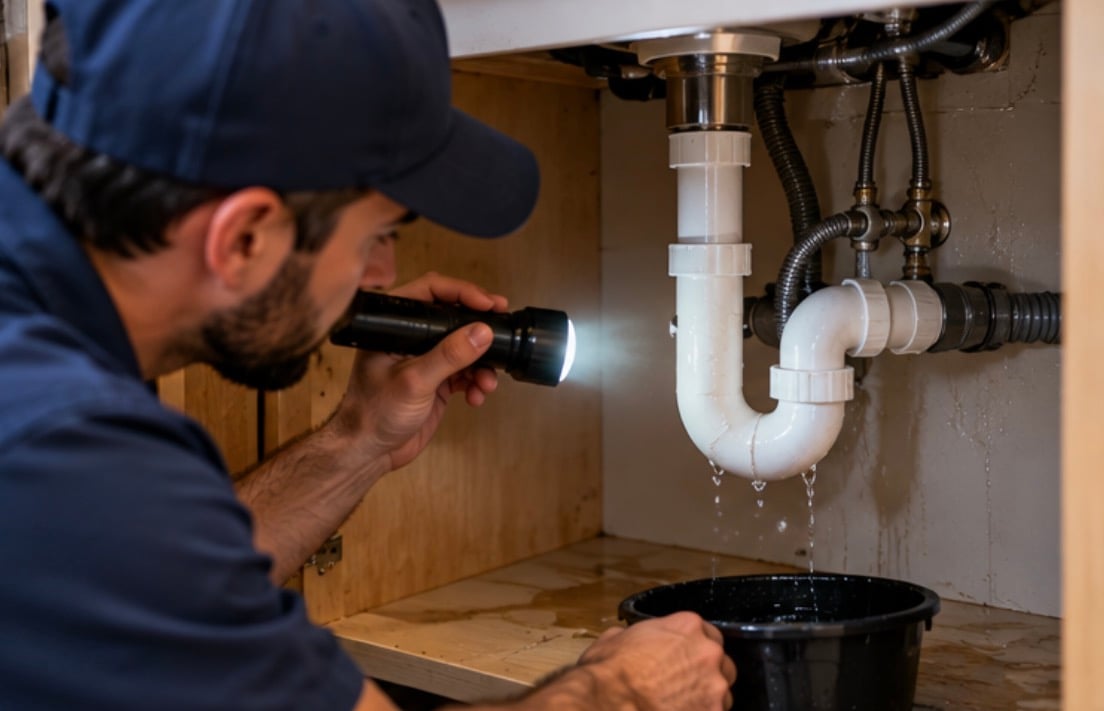
Homeowners often assume that a leak will eventually reveal itself somewhere obvious. Many do, but the leaks that cause the most expensive damage are precisely the ones that take months to surface, and four characteristics explain why they stay hidden so long.
Travels Along Pipe Runs Before It Surfaces
Water escaping a pipe follows the path of least resistance, which is often the pipe itself. The damp patch can appear several feet from the actual failure, which is why guessing leads to unnecessary opening up.
Hides Beneath Slab Foundations Common in Florida
A leak under concrete has no visible route out. It can run for a long period before it produces a warm floor, a sound, or movement in the slab above it.
Mimics Condensation in a Humid Climate
In a humid environment, pipes sweat and surfaces stay damp for reasons that have nothing to do with a leak. That makes visual inspection alone considerably less reliable here than in a dry climate.
Shows Up on the Water Bill Before the Wall
A slow leak can waste a meaningful volume long before it produces any visible damage. The meter often knows months before the drywall does.
If any of that sounds familiar, a meter test is the cheapest first step you can take yourself. Turn everything off, note the reading, and check it again after an hour or two of no use. Movement means water is going somewhere, and water leak detection and repair can establish exactly where using thermal imaging and hydrostatic pressure testing.
What Should a Plumbing Inspection Cover After Heavy Rain?
An inspection after the wet season carries a different emphasis than a routine one would. The priority is separating weather damage from genuine plumbing failure, and confirming that anything hidden gets found before it has a chance to become a structural problem.
The items below are what a thorough post-season inspection looks at. Not every home needs all of them, and the scope should match what the symptoms suggest.
| What Gets Inspected | Why It Matters |
|---|---|
| Water meter under a no-use test | Establishes whether water is being lost continuously anywhere. |
| Visible supply lines and fixture connections | The most accessible failures, and the cheapest to correct early. |
| Water heater and its surrounding area | A common source of slow loss that goes unnoticed in a garage or closet. |
| Floors over slab, checked for heat and sound | The primary method of narrowing down a suspected slab leak. |
| Drain and sewer lines by camera where indicated | Ground movement after heavy rain can shift or crack buried lines. |
| Shut-off valves and their condition | Valves that will not close turn a small leak into a large emergency. |
That last row is easy to overlook. A leak you can isolate is an inconvenience, whereas a leak you cannot isolate because the valve has seized becomes a considerably larger event.
What Happens During a Leak Detection Visit?
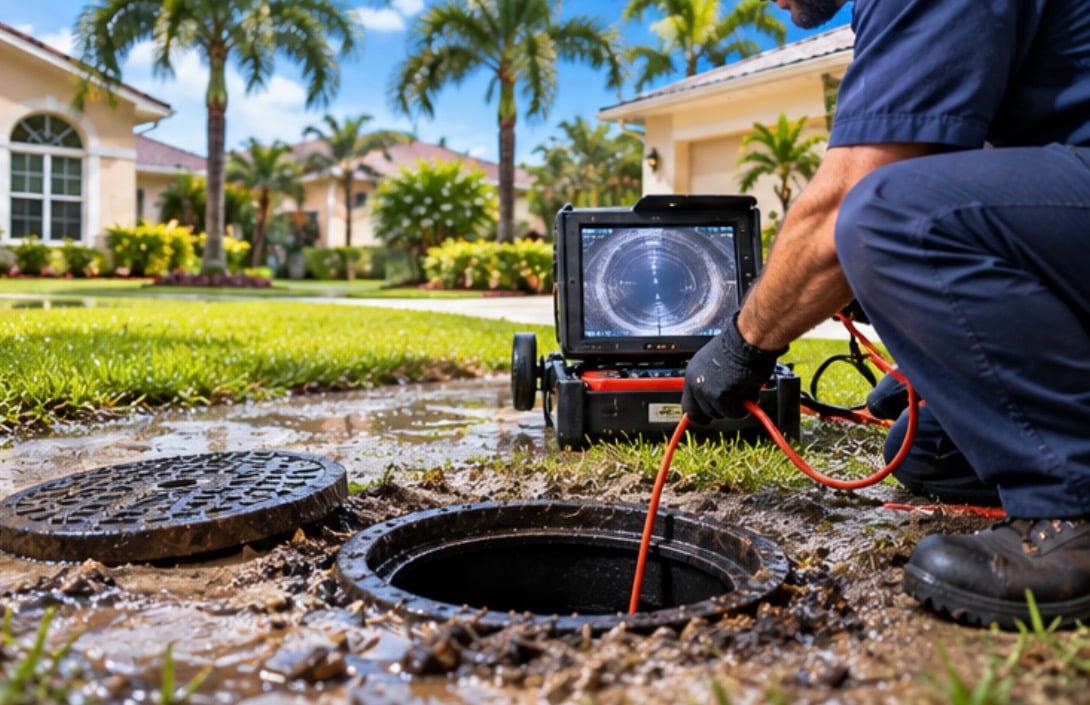
Leak detection is a process of elimination rather than one single test that produces an answer. The aim throughout is to narrow the location far enough that any opening up is small and targeted rather than exploratory guesswork across several rooms.
Confirming Water Loss at the Meter First
Before anything else, a no-use meter test establishes whether water is actually being lost. That single step separates a real leak from condensation or from weather damp.
Isolating the Supply to Narrow the Area
Sections of the system are shut off in turn to determine which part continues to lose water. This narrows the search from the whole house to a defined zone.
Using Thermal Imaging to Locate the Source
A thermal imaging camera reveals temperature differences behind surfaces, which is how a hot water line under a slab or inside a wall is pinpointed without demolition.
Running a Camera Through Drain and Sewer Lines
Where the concern is drainage rather than supply, a camera inspection shows the internal condition of the line directly, including cracks, root intrusion and separated joints.
Working in that order keeps the disruption proportionate. A leak located precisely usually means one small access point rather than several exploratory ones, which matters as much for the repair cost as for the finish work afterward.
Water heaters are worth including while someone is already on site. They sit quietly in a garage or closet losing small amounts of water for months, and they are among the most common sources of slow loss we find during an inspection prompted by something else entirely. Our full plumbing service list covers water heater work alongside leak detection.
Is an Inspection Worth It If Nothing Is Visibly Wrong?
That depends largely on what your water meter says. If a no-use test shows no movement at all and there are no other symptoms, a full inspection is probably not urgent, and it is entirely reasonable to wait until something changes.
Where it earns its place is when something does not add up. A bill that has climbed without explanation, a pressure drop, a persistent musty smell, or a floor that feels warm in one spot are all worth resolving while they are still small.
The economics favor early investigation in this climate specifically. Humidity means water escaping inside a structure causes secondary damage faster than it would in a dry region, so the gap between a plumbing repair and a restoration project is considerably shorter here.
Drain lines deserve a separate mention. Ground movement after a saturated summer can shift or crack buried pipe, and those failures present as slow drainage or backups rather than as visible water, which is where drain cleaning and camera inspection earns its place. Where a line has scaled or blocked badly, hydrojetting clears it at pressures a drain snake cannot match.
FAQs
How Can I Tell If I Have a Leak Without a Plumber?
Turn off every water-using fixture and appliance, note the meter reading, then check it again an hour or two later. Any movement means water is leaving the system somewhere.
What Is a Slab Leak and How Serious Is It?
It is a leak in a pipe running beneath the concrete foundation, which is common in Florida construction. Left alone it can undermine the slab, so it is worth locating promptly.
Does Homeowners Insurance Cover Hidden Leaks?
Coverage varies considerably by policy and by whether the damage was sudden or gradual. Documenting the discovery and the repair helps, but only your insurer can confirm what applies.
How Much Does Leak Detection Cost?
Our plumbing diagnostic is a flat $99, which covers establishing what is actually happening before any repair is quoted. The repair itself is priced separately and given to you upfront.
Can Heavy Rain Cause a Plumbing Leak?
Indirectly, yes. Saturated ground shifts, and that movement can stress buried supply lines and slab penetrations that were previously sound, which is why some leaks do appear after a wet season.
Why Choose R&A Industries for Leak Detection in Oviedo?
Finding a hidden leak is not just about locating moisture. It is about tracing the source without creating unnecessary damage along the way. At R&A Industries, we use diagnostic methods such as thermal imaging and sewer camera inspection to narrow down where water is coming from before determining the appropriate repair. If testing confirms an active leak, our water leak detection and repair service can address the problem based on what the inspection actually finds.
R&A Industries has served Oviedo and Central Florida since 2001. We are licensed in Florida for plumbing under CFC1433199, and our diagnostic is a flat $99, with repair pricing provided upfront before work begins. When the inspection points to damaged or deteriorated piping, our drain pipe repair and repiping services can help determine whether a targeted pipe repair or a larger piping solution is appropriate. We also provide emergency plumbing 24/7 when a leak cannot wait.
If your home has stayed damp after Florida’s rainy season, your water bill has increased without an obvious reason, or you suspect a hidden plumbing problem, getting the source identified early can help prevent more extensive damage. Call (407) 384-0034 or contact our Oviedo plumbers to arrange an inspection.