Skip to content



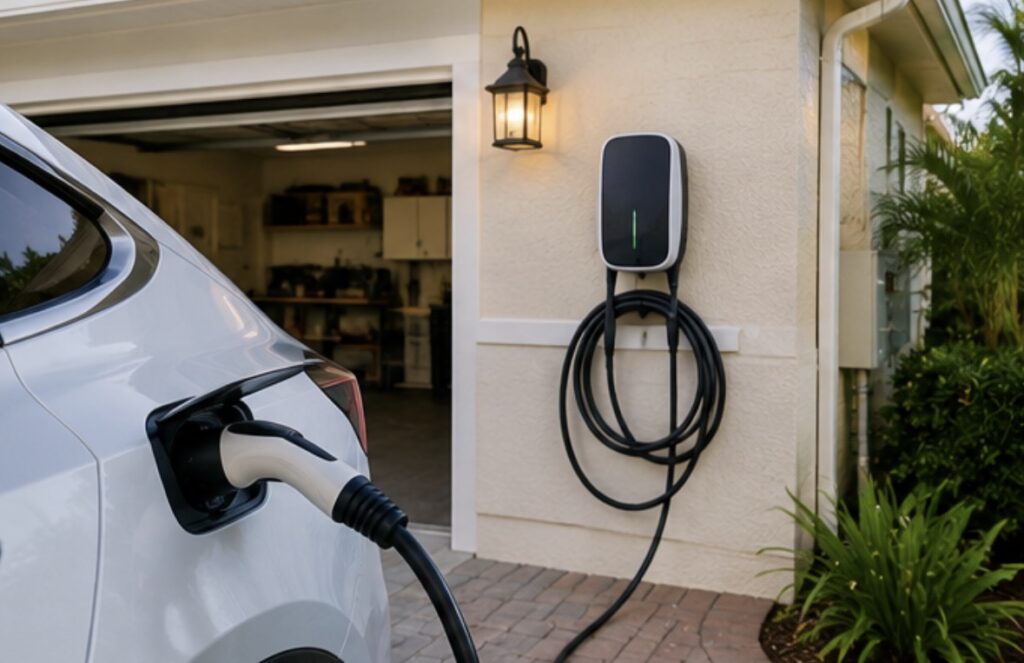
Buying an electric vehicle is exciting, but the charging setup deserves attention before you bring the car home. A Level 2 EV charger can recharge much faster than a standard 120-volt outlet, but it also adds a substantial electrical load to your Oviedo home. The key question is not simply whether you have an empty breaker slot. Your panel, wiring, and home’s existing electrical demand all have to work together safely.
A typical Level 2 charger operates at 240 volts and may require a 40- or 50-amp circuit, depending on the charger’s specifications. At that level, the installation can add a significant continuous load alongside your air conditioner, electric range, water heater, pool equipment, and other major appliances.
The good news is that many homes can accommodate an EV charger without replacing the entire electrical system. Others may need a panel upgrade or another electrical solution first. This guide explains what an Oviedo homeowner should check, what the numbers mean, and when a professional evaluation is necessary.
What Electrical Capacity Does a Level 2 EV Charger Need?
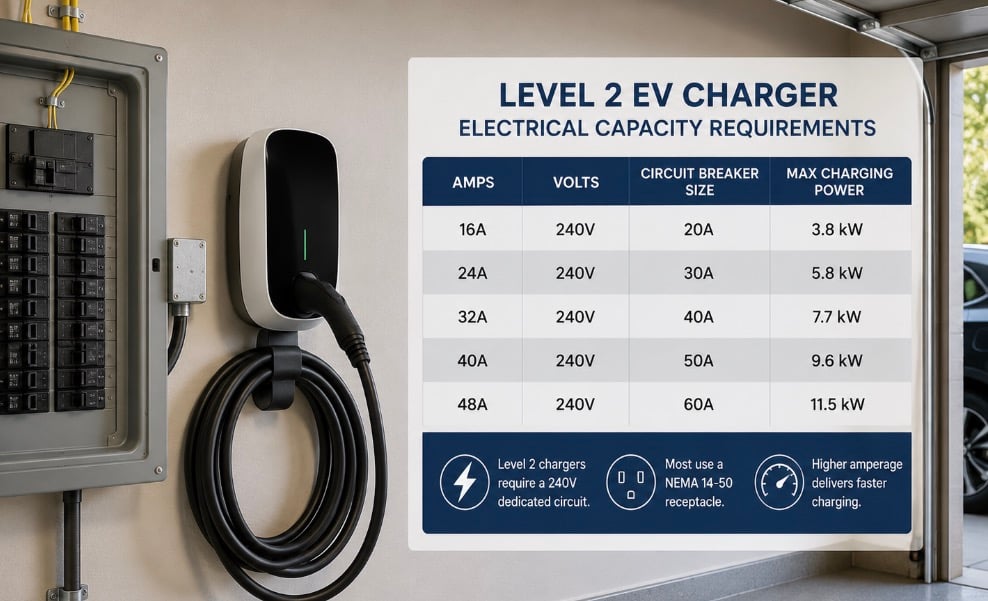
Level 2 chargers are substantially more demanding than the standard outlet that comes with many EVs. While a 120-volt Level 1 charger can plug into a conventional household receptacle, a Level 2 installation normally requires a dedicated 240-volt circuit connected directly to the electrical panel.
The exact electrical requirement depends on the charger and its configured charging rate. For example, a charger drawing 32 amps continuously may require a 40-amp circuit, while a charger drawing 40 amps continuously may require a 50-amp circuit. The electrician should size the circuit based on the actual equipment specifications rather than assuming every Level 2 charger requires the same breaker.
Why the Breaker Size Is Larger Than the Charger Draw
EV charging is treated as a continuous electrical load because the charger can operate for several hours at a time. Under the commonly applied 125% continuous-load sizing rule, a 40-amp continuous load requires a circuit capable of handling 50 amps.
That distinction matters when homeowners look at their panel. A 50-amp breaker does not mean the charger will necessarily consume 50 amps every moment it operates. It means the circuit has been appropriately sized for the charger’s specified continuous load.
Can a 200-Amp Panel Handle an EV Charger?
A 200-amp electrical panel gives a home substantially more capacity than a 100-amp panel, but that does not automatically mean it can accept an EV charger. The panel’s total rating is only one part of the calculation. Your electrician also needs to determine how much electrical demand your home already places on the system.
Consider a typical Oviedo home with several major electrical loads:
| Existing load | Why it matters |
|---|---|
| Central AC | Florida cooling can create substantial summer demand |
| Electric water heater | Draws significant power when heating |
| Electric range | Adds another large appliance load |
| Pool equipment | Pumps and heaters can increase demand |
| Electric dryer | Requires a dedicated high-capacity circuit |
| EV charger | Adds a substantial continuous load |
A 200-amp panel may have adequate capacity after these loads are considered, while another 200-amp home may be much closer to its practical limit. That is why an electrician should perform a load calculation instead of approving an installation based only on the number printed on the main breaker.
Three Things Determine Whether Your Panel Is Ready
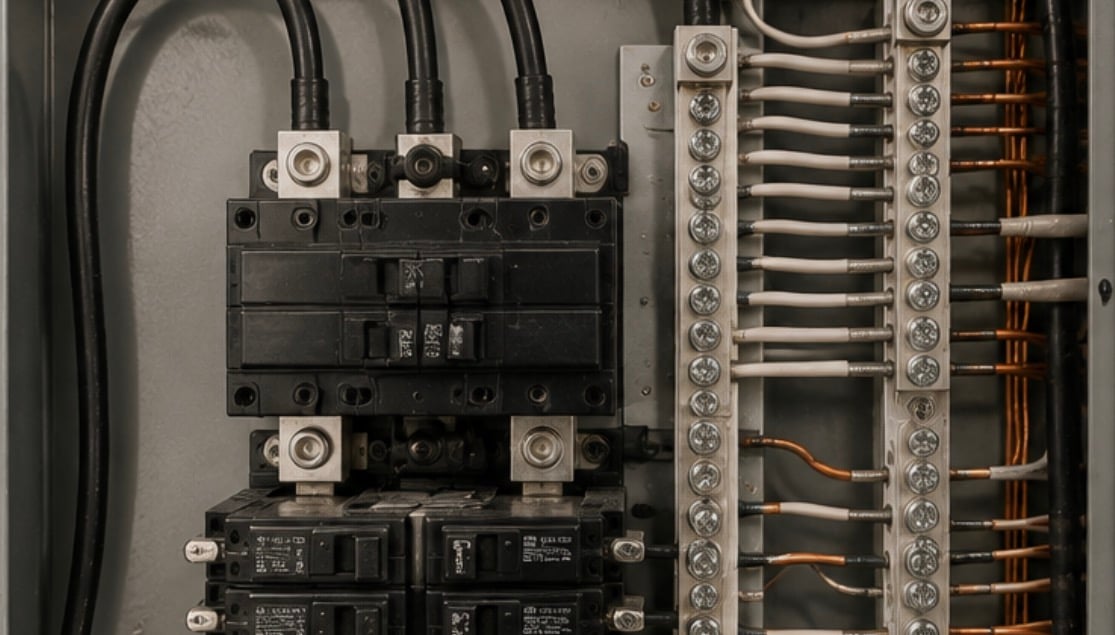
Before installing a Level 2 charger, an electrician should evaluate more than the panel’s amperage. These three factors provide the clearest picture of whether your existing electrical system can support the new load.
1. Main Panel Capacity
Look at the main breaker serving your home. You may see ratings such as 100 amps, 150 amps, or 200 amps. Older homes are more likely to have lower-capacity electrical services, while newer homes commonly have 200-amp service.
The rating provides a starting point, not the final answer. A 100-amp panel may have difficulty accommodating a large EV charging load alongside modern household appliances, while a 200-amp panel may have sufficient capacity depending on the home’s actual electrical demand.
2. Available Breaker Space
A Level 2 charger generally needs a dedicated 240-volt, double-pole breaker. Your panel therefore needs suitable physical space as well as sufficient electrical capacity.
A panel that appears full may require a different solution before the charger can be installed. An electrician can determine whether the existing configuration can safely accommodate the required breaker or whether additional work is necessary.
3. Whole-Home Load Calculation
This is the most important step. A load calculation considers your home’s existing electrical demand and the proposed EV charger to determine whether the service can safely support the additional load.
That calculation should account for the equipment you actually use rather than simply adding the amperage printed on every breaker. It gives the electrician a much more reliable basis for deciding whether your existing panel can handle the charger.
Warning Signs Your Oviedo Panel May Need Attention First
An EV charger should not be installed on an electrical system that already shows signs of trouble. Certain conditions deserve an electrician’s attention before adding another major load.
- Older 100-amp service: Limited capacity may make a high-amperage EV charger difficult to accommodate.
- No suitable breaker space: A crowded panel may require modifications before a dedicated charger circuit can be added.
- Frequent breaker trips: Repeated trips can indicate an existing electrical problem rather than insufficient EV capacity alone.
- Flickering lights: Noticeable flickering when major appliances operate deserves investigation.
- Heat or burning odor: Warm breakers, discoloration, or burning smells require prompt professional attention.
- Outdated equipment: Older or problematic panel equipment should be evaluated before adding a significant new load.
If your panel has one of these warning signs, do not try to solve the problem by simply installing a larger breaker. The breaker, wiring, panel, and electrical service must be properly matched. A larger breaker installed without the appropriate system capacity can create a serious safety hazard.
Do You Need a Panel Upgrade for an EV Charger?
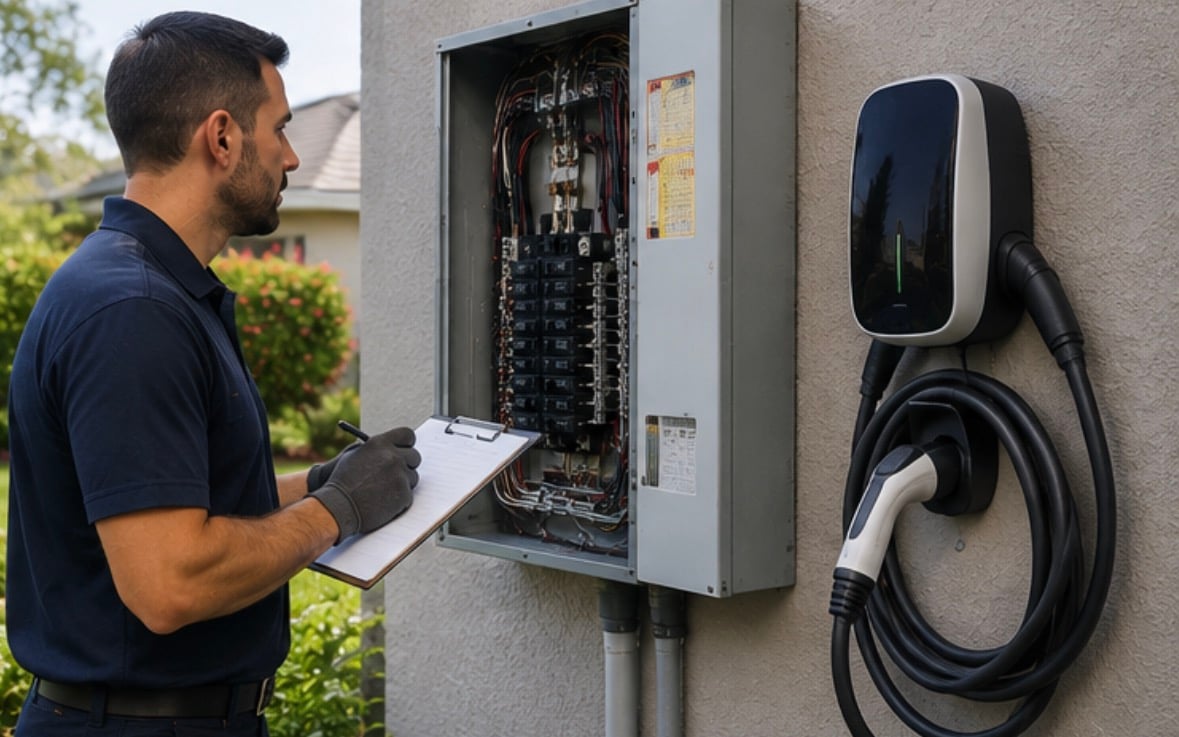
Not necessarily. A panel upgrade is appropriate when the existing electrical service cannot safely accommodate the additional EV charging load, but it should not be treated as an automatic requirement for every Level 2 installation.
A qualified electrician may find that your existing 200-amp service has enough capacity after completing the load calculation. In another home, the calculation may show that the existing service is already heavily loaded, making a service or electrical panel installation in Oviedo the better long-term solution.
When an Upgrade Becomes More Practical
A panel upgrade may make more sense when the home has limited service capacity and several major electrical loads already operate regularly. It can also be worth considering if you expect to add other electrical equipment in the future, such as a pool heater, heat pump, electric range, or additional EV.
The important point is to size the electrical system around your home’s actual needs. An electrician should explain why an upgrade is necessary, what capacity the new panel provides, and how it addresses both the EV charger and your future electrical demands.
What a Professional EV Charger Evaluation Should Include
A proper evaluation should begin with the electrical system you already have, not with a predetermined installation package. The electrician should inspect the panel, identify its main service rating, review the existing circuits, determine the proposed charger’s electrical requirements, and perform the necessary load calculation.
The installation location matters, too. The distance between the electrical panel and the charger affects the wiring required, while the garage or exterior location determines how the equipment and wiring need to be installed and protected.
Before approving the work, ask the electrician to explain:
| What to confirm | Why it matters |
|---|---|
| Charger amperage | Determines the required circuit size |
| Breaker size | Must match the charger and circuit requirements |
| Panel capacity | Establishes whether the existing service can handle the load |
| Wiring requirements | Ensures conductors are appropriately sized |
| Installation location | Affects wiring route and installation requirements |
| Permit requirements | Helps ensure the project is completed according to applicable local requirements |
| Total project cost | Prevents unexpected charges after work begins |
A professional EV charger installation in Oviedo should leave you with more than a charger mounted on the wall. You should know that the circuit was properly sized, the electrical system was evaluated, and the installation was completed for the actual requirements of your vehicle and charger.
How to Choose the Right EV Charger Installation Contractor
The cheapest installation quote is not necessarily the best value when you are adding a high-capacity electrical load to your home. Look for a licensed electrical contractor who will evaluate your panel and perform the appropriate load calculation before recommending equipment or an upgrade.
Before hiring, ask:
- What is my panel’s main rating?
- How much available capacity does my home have?
- What amperage will my charger actually draw?
- Does the installation require a dedicated 240-volt circuit?
- Will my existing wiring support the proposed circuit?
- Do I actually need a panel upgrade?
- What permits and inspections are required?
- What is included in the written installation price?
A electrical contractor who answers these questions clearly is giving you something more valuable than a fast installation. They are showing that the charger is being designed around your home’s electrical system rather than treating every house as if it has identical capacity.
Why Choose R&A Industries for EV Charger Installation in Oviedo?
Installing a Level 2 charger should start with knowing whether your home’s electrical system can safely support it. R&A Industries has served Oviedo homeowners since 2001, with licensed electricians who can evaluate your existing panel, determine the charger’s electrical requirements, and explain whether you need an upgrade or can use your current service.
If your panel has sufficient capacity, the team can proceed with the appropriate EV charging installation without adding unnecessary electrical work. If the existing service needs more capacity, an electrical panel upgrade can address that limitation and prepare the home for additional electrical demands.
If you are ready to install a Level 2 charger, start with an evaluation rather than guessing whether your panel can handle it. R&A Industries can assess the electrical capacity of your Oviedo home and provide a properly planned EV charger installation based on your vehicle, charger specifications, and existing electrical system.