Skip to content




An Oviedo air conditioner works through months of heat, humidity, and frequent cooling cycles, so it can accumulate wear even when the house stays comfortable. By late summer, you may notice longer run times, weaker airflow, rising energy bills, or no obvious symptoms at all. That makes it difficult to know whether maintenance is actually necessary.
A system that still cools properly is not necessarily operating at its best. Dirty coils, restricted airflow, a clogged drain, worn electrical components, or other developing issues can remain hidden until the next period of heavy cooling demand. Understanding what a long Florida summer can do to your AC can help you decide whether it needs attention before the next season.
What Does a Central Florida Cooling Season Do to a System?
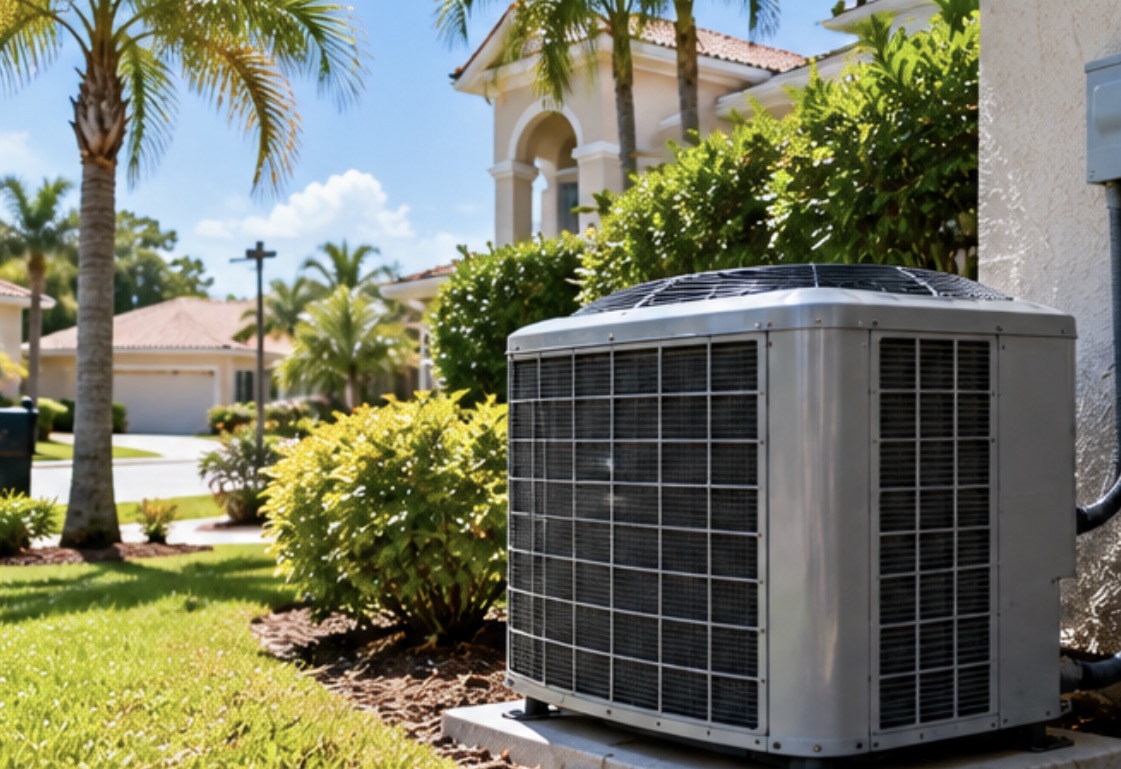
Air conditioners in most of the country work hard for roughly three months a year. In Seminole County they run in some capacity for the better part of nine, and through the summer they rarely stop for long enough to fully dry out internally.
That changes which parts wear first. Electrical components accumulate cycles faster, the compressor spends more hours under load, and the condensate system handles far more water than equipment in a drier climate ever has to move.
None of this announces itself while the weather holds. It shows up as a system that cools slightly less well each year, or as water appearing somewhere it should not, usually at the least convenient moment.
Which Oviedo Systems Should Be Serviced First This Fall?
Some systems come through the season with very little to show for it, while others accumulate the wear that decides next summer. Age, service history and how much the drain has been asked to handle usually separate the two groups.
The situations below tend to justify an earlier appointment across Oviedo and the surrounding area. An on-site assessment is what settles it, but this can help you judge where your own system sits.
| Situation | Why It Should Be Seen Sooner |
|---|---|
| A system more than eight years old | Components already aging have just completed their heaviest run of the year. |
| No service since before spring | Charge, capacitance and drain condition have not been checked in a full season. |
| Water seen near the air handler | Suggests a condensate drain that has partially blocked with growth. |
| Musty smell when the system starts | Points to moisture or biological growth at the coil or in the drain pan. |
| Noticeably longer run times than last year | Often the first sign that capacity or airflow has quietly dropped. |
| A system that keeps the house cool but damp | Indicates the equipment is cooling without removing moisture properly. |
That last row is worth pausing on. In this climate a system can hold temperature while failing at humidity, and homeowners tend to read that as a comfort preference rather than as a symptom worth reporting.
What Makes Humidity Harder on Equipment Than Heat Alone?
Most maintenance advice written for a national audience treats heat as the main stressor. In a hot and humid climate the moisture load does more of the damage, and it does it in places a visual inspection rarely reaches.
Keeps the Evaporator Coil Wet for Longer Periods
A coil that is condensing moisture almost continuously never really dries. That sustained wetness is what allows growth to establish on the fins and in the pan beneath them.
Fills the Condensate Drain With Biological Growth
The drain line carries water away all season, and in warm conditions that line is an ideal place for growth to form. A partial blockage often shows as water damage rather than as any cooling complaint.
Raises the Load the System Carries Overnight
Humidity does not fall away after dark the way dry heat does. The equipment therefore runs longer into the night than a comparable system in a drier region, adding hours the maintenance interval never accounted for.
Encourages Growth Inside the Air Handler Cabinet
Warm, damp air passing through the cabinet all season creates conditions that favor microbial growth. That is a comfort and air quality issue as much as a mechanical one.
If the house has felt damp or smelled musty when the system starts, that is worth mentioning when you book. Our air conditioning services cover the drain and coil side, and indoor air quality addresses what the humidity has left behind in the cabinet and ducts.
What Should an AC Tune-Up Measure on a Florida System?
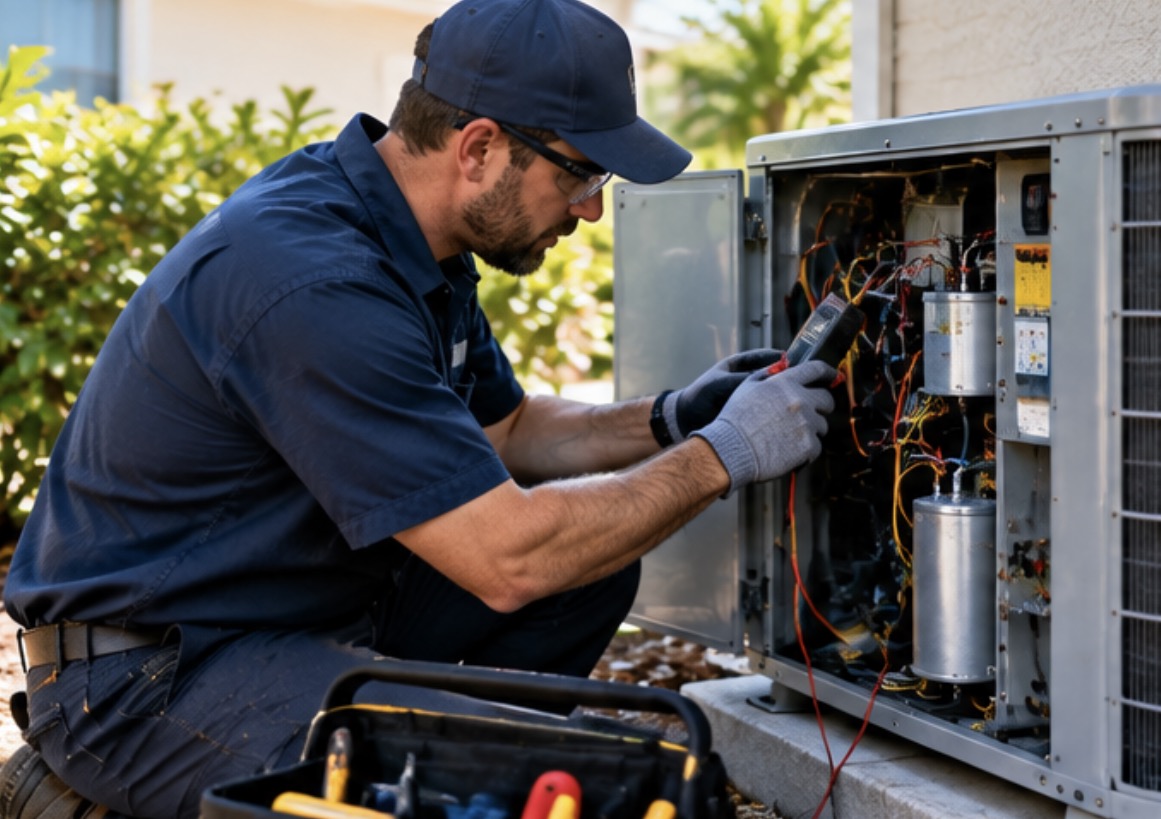
There is a real difference between a maintenance visit that produces readings and one that produces a rinsed outdoor unit and an invoice. In this climate the condensate side deserves as much attention as the refrigerant side, because that is where a season of humidity actually shows up.
The checks below are the ones that carry genuine diagnostic weight here. Asking which of them were performed is a reasonable way to judge the quality of the work.
| What Gets Checked | What It Tells You |
|---|---|
| Condensate drain and float switch | Whether a season of water has left the drain close to blocking. |
| Evaporator coil condition | Whether growth or fouling is restricting airflow and moisture removal. |
| Refrigerant charge against specification | Whether capacity loss is a charge problem rather than a failing component. |
| Run capacitor capacitance | Whether the component still meets its rated value after a long season. |
| Compressor and fan amp draw | Whether motors are drawing more current than they should under load. |
| Indoor humidity while the system runs | Whether the equipment is genuinely dehumidifying or only cooling. |
A reading that has drifted does not always mean a repair is due today. It does mean the trend is known, and a component measuring below specification can be replaced on your schedule rather than during next August.
Where the readings point to a system near the end of its service life, that is a conversation better had now than during a failure. Air conditioning replacement and installation is far easier to plan in the shoulder season than to arrange in an emergency.
Commercial properties follow the same logic on a larger scale, where several units make a slow decline even harder to spot. Our commercial HVAC service applies the same measurement approach across multiple units rather than treating a building as one system.
What Happens During an Air Conditioning Maintenance Visit?
A maintenance visit follows a consistent order, and in a hot humid climate that order puts water ahead of almost everything else. A condensate drain close to blocking is the single most likely thing to cause real damage between now and the start of next season.
Clearing the Condensate Drain and Testing the Float Switch
The drain line is cleared and the safety float is tested to confirm it will actually shut the system down. That switch is what stands between a blocked drain and a ceiling repair.
Inspecting the Coil and Cabinet for Growth
The evaporator coil, the drain pan and the surrounding cabinet are examined for the growth that humid operation encourages. Finding it early is considerably cheaper than remediating it later.
Taking Electrical and Refrigerant Readings
Capacitance, amp draw and charge are measured against specification rather than assessed by eye. These are the numbers that predict next season rather than describe this one.
Recording the Figures for Next Year
The readings are documented so the next visit has something to compare against. A single set of numbers describes a system, but two sets describe a direction.
A visit that ends with a clear set of figures gives you something to act on. It also gives any future technician a baseline, which is worth more than a note recording that the system appeared to be working.
Is Annual Service Enough in a Year-Round Cooling Climate?
For a system running close to twelve months of the year, a single annual visit is generally fairly thin cover. Most national maintenance guidance assumes a long dormant season for the equipment, and that dormant season simply does not exist anywhere in Central Florida.
Two visits a year suits the local pattern considerably better. One before the heaviest cooling months confirms the system is ready for them, and one afterward catches what those months left behind, particularly in the condensate system where the damage tends to accumulate unseen.
The commercial argument points the same way. A blocked drain that reaches a ceiling costs far more than a service visit, and the repair is rarely covered by anything other than you.
Our AC maintenance service runs on that schedule, and the Gold Preventative Maintenance Plan covers two visits a year at $18 a month, which for most households is less than the cost of a single emergency call during a July afternoon.
Common Questions About AC Maintenance in Oviedo
These come up most often once the worst of the heat has passed and homeowners start thinking about the system again rather than simply enduring it. Several of them have a noticeably different answer here than the same question would have in a drier part of the country.
Is Fall a Good Time to Book Cooling Maintenance?
It is one of the better windows. The system has just finished its hardest work, so anything marginal is still measurable, and technician availability is generally better than during a summer heat wave.
Why Does My House Feel Damp Even When It Is Cool?
That usually means the system is cooling without dehumidifying properly, which can indicate oversizing, a fouled coil or short cycling. It is a genuine fault rather than a comfort preference.
How Often Should the Condensate Drain Be Cleared?
In this climate, at least annually and ideally at both service visits. A drain that has run all summer in warm conditions is the most common source of water damage we see.
Does My System Need Service If Nothing Went Wrong?
Quite possibly. Capacitance, charge and amp draw are instrument readings rather than things a homeowner can observe, so a season without complaints proves very little about remaining margin.
Should I Change Filters More Often in Florida?
Generally yes, because systems here run far more hours than the filter interval assumes. A restricted filter reduces airflow across the coil, which affects moisture removal as well as cooling.
Why Choose R&A Industries for AC Maintenance in Oviedo?
A cooling system in this climate should be judged on measurements rather than appearance, and the condensate side deserves as much attention as the refrigerant side. That is the standard our technicians work to on every maintenance visit.
R&A Industries has served Oviedo and Central Florida since 2001 and holds a 4.9-star rating across 712 reviews. We are licensed in Florida for HVAC under CAC1820213, and we work across Seminole, Orange, Osceola, Volusia, Brevard and Marion counties. Estimates are complimentary and pricing is given upfront.
If your system ran longer this year than last, left the house feeling damp, or simply has not been measured since spring, this is a sensible point in the year to have it checked. Call (407) 384-0034, or see AC repair in Oviedo if something has already failed.