Skip to content



When Orlando’s heat and humidity peak, your air conditioner runs harder than almost any system in the country. That is also when problems show up: weak airflow, warm rooms, strange noises, or water pooling around the air handler. Sometimes the unit freezes over, and other times it simply will not turn on. These breakdowns are rarely random.
Most summer AC failures trace back to a handful of common causes, and spotting them early can save you a miserable, sweaty wait. Knowing the seven most frequent problems, and when to call professional AC repair in Orlando, helps you catch trouble before it shuts the whole system down.
Why Orlando Summers Strain Air Conditioning Systems

Central Florida asks more of an air conditioner than almost anywhere else. Your system fights 90-plus degree days, heavy humidity, and roof and attic heat that builds all afternoon. Instead of cycling on and off, it may run 10 to 18 hours a day, so every weak part gets pushed to its limit. That constant strain is what turns small issues into mid-summer breakdowns.
Several local conditions pile on at once. High humidity forces the system to pull gallons of moisture from the air nonstop, and daily thunderstorms bring power surges that punish capacitors, contactors, and thermostats. Outdoor units often sit in grass clippings, pollen, and vegetation that choke airflow and trap heat, and long daily run times wear down motors, coils, and electrical parts faster than milder climates ever would.
All of that relentless strain has to surface somewhere, and it usually does as one of a handful of predictable failures. The seven problems below are the ones our technicians see most often once Orlando’s heat truly sets in. The first one catches many homeowners off guard, because it involves ice forming in the middle of summer.
AC Problem #1: Frozen Evaporator Coils

It sounds impossible in Florida heat, but a frozen coil is one of the most common summer calls. When the evaporator coil ices over, airflow drops, rooms feel stuffy, and the system runs nonstop while barely cooling. You might spot ice on the copper lines, feel weak air from the vents, or find water on the floor as the ice thaws.
- Clogged Filter: Restricted airflow over the coil is the most frequent cause of freezing.
- Blocked Vents: Closed or covered supply and return vents starve the system of airflow.
- Dirty Coil: Dust and pet hair on the coil trap cold and encourage ice to form.
- Low Refrigerant: A refrigerant problem can drop coil temperature below freezing during long runs.
A frozen coil is often tied to airflow, but it can also point to a deeper issue with the refrigerant that keeps the entire system cooling. When that charge runs low, the symptoms look different and are easy to mistake for something minor. The next problem explains why low refrigerant quietly drives up your energy bills.
AC Problem #2: Refrigerant Leaks and Low Cooling
Your system can sound normal and still struggle to cool when refrigerant runs low. A leak forces the AC to work longer to pull heat and humidity from the air, driving up the power bill while rooms stay sticky. A system 10 percent low on refrigerant can lose up to 20 percent of its cooling capacity, so even a small leak makes a real difference.
The signs of low refrigerant are easy to miss at first. Vents blow air that feels cool but never quite cold, especially in late-afternoon heat, and the system runs nearly nonstop while the thermostat barely moves toward the set temperature. Electric bills climb even though your usage habits have not changed, and a faint hissing or bubbling near the indoor or outdoor unit can point to an active leak.
Refrigerant controls how cold the air coming from your vents actually feels, but it is only half of what your AC manages on a humid day. The system also pulls enormous amounts of moisture from the air, and all of that water has to go somewhere. The next problem deals with where it is supposed to drain.
AC Problem #3: Clogged Condensate Drain Lines
Pulling humidity from the air leaves your AC with gallons of water to drain every day through a small PVC line. When algae, sludge, or debris build up inside, that line clogs and the water has nowhere to go. In Central Florida’s humidity, this is one of the most common causes of water damage and surprise shutdowns during summer.
| Warning Sign | Likely Cause | What Happens Next |
|---|---|---|
| Ceiling stain near air handler | Overflowing drain line | Water damage spreads |
| Water around indoor unit | Clogged condensate line | Float switch may trip |
| System randomly shuts off | Safety switch sensing backup | Cooling stops until cleared |
| Musty smell near vents | Algae growth in the line | Odor circulates through home |
A clogged drain line can cause real damage, yet many drainage and cooling complaints trace back to something far simpler and cheaper to fix. Homeowners are often surprised that the root cause sits in plain sight, needing only routine attention. The next problem is the most common of them all, and also the easiest to prevent.
AC Problem #4: Dirty Air Filters and Restricted Airflow

A surprising share of summer cooling emergencies start with a clogged air filter. When dust, pet hair, and Florida pollen pack the filter, the system cannot pull enough air across the coil. You feel weak airflow, rooms that never fully cool, and longer run times that push your bill higher. Replace 1-inch filters every 30 to 60 days during cooling season, and if airflow stays weak afterward, restricted ducts may be the culprit, where professional duct cleaning can help.
- Hot and Cold Spots: Some rooms feel stuffy while others stay comfortable from uneven airflow.
- Extra Dust: A clogged filter stops trapping particles and blows them back into the home.
- Noisy Vents: Whistling or whooshing means the blower is straining to pull enough air.
- Longer Runs: The system cycles longer to reach temperature, raising both wear and energy use.
Restricted airflow forces the whole system to work harder than it should, but at least it tends to build slowly. Summer storms are far less forgiving, hitting the electrical components directly and often without any warning. Lightning, surges, and constant run time take a real toll, which is why the next problem focuses on the parts that power everything.
AC Problem #5: Capacitor and Electrical Failures
When storms roll through and the heat never lets up, your AC’s electrical parts take a beating. Capacitors help the compressor and fan motors start and keep running, and power surges, lightning, and long run times wear them down until they fail. Most capacitors last 5 to 10 years, but Central Florida’s conditions can cut that lifespan short.
Electrical trouble usually announces itself before a full failure. The system might click but struggle to start, a classic sign of a weak capacitor, or short cycle by starting and stopping again within a minute or two. In other cases the outdoor unit runs while the air indoors stays warm, and a burning smell near the unit points to overheating parts and a reason to shut it off right away.
Electrical failures rarely happen in isolation, and they often overlap with the one component that tells the whole system what to do. When the thermostat misreads conditions or loses its signal, even healthy equipment starts behaving erratically. The next problem looks at how a small device on the wall can throw off comfort throughout the entire house.
AC Problem #6: Faulty Thermostats and Short Cycling

Not every cooling problem starts at the AC unit. A failing or poorly placed thermostat can misread the temperature and tell the system to start and stop too often, a pattern called short cycling. That wears down components and leaves rooms uneven. Sometimes the fix is simple, like fresh batteries or moving the thermostat away from heat and direct sun.
| What You Notice | Possible Thermostat Cause |
|---|---|
| AC starts and stops frequently | Short cycling from a misread temperature |
| Rooms never match the setting | Thermostat placed near heat or sunlight |
| Unit ignores schedule changes | Failing thermostat or dead batteries |
| Temperature readings seem off | Aging sensor needing calibration |
Simple fixes like fresh batteries or moving the unit away from heat solve many thermostat issues, but not all of them. If the short cycling continues, have a technician check it before the constant starting and stopping wears down pricier parts. The final problem moves back outdoors, to the unit doing the hardest work of all.
AC Problem #7: Dirty Condenser Coils and Blocked Outdoor Units
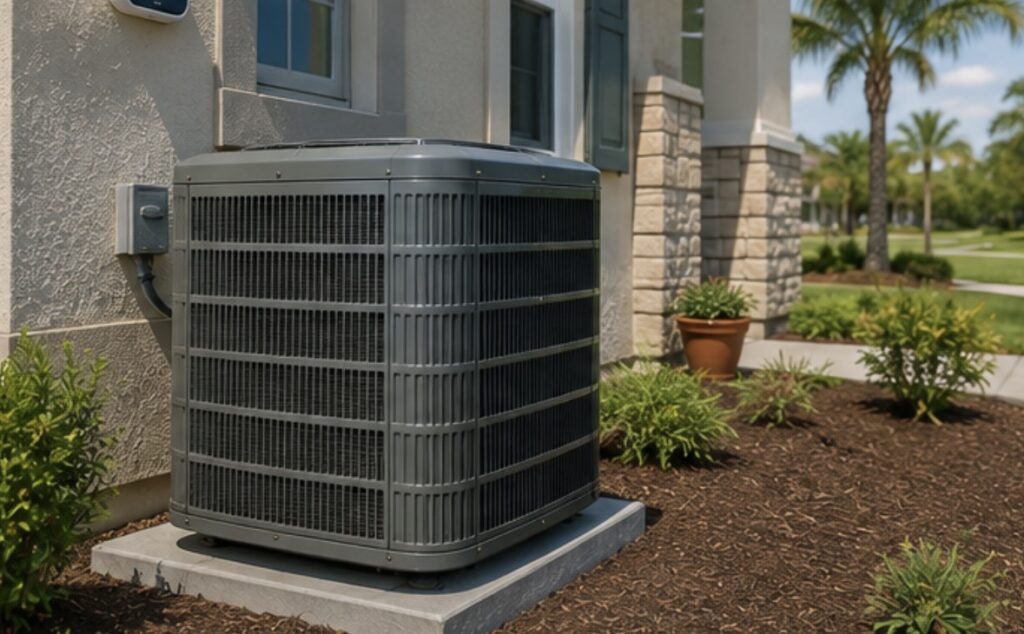
Your outdoor unit releases the heat your AC pulls from the house, and it cannot do that job when it is choked with debris. Grass clippings, pollen, leaves, and dense shrubs wrap the condenser coil and trap heat against it. The system then runs longer, cools less, and strains the compressor, the single most expensive part to replace.
- Caked Coil: Dirt and pollen on the condenser coil block heat from escaping the unit.
- Crowding Plants: Shrubs or fences set too close to the unit choke off needed airflow.
- Bent Fins: Damaged coil fins restrict airflow and reduce how well the unit sheds heat.
- Warm Exhaust: Air off the top of the unit should feel hot, not weak or blocked.
Most of these problems are manageable when the right technician handles them, but the outcome depends on honest diagnosis. A tech who swaps parts without finding the root cause leaves you calling again in weeks. The one who tests airflow, refrigerant, and electrical components, then explains what they find, is the one who actually fixes the heat.
Why Choose R&A Industries for AC Repair in Orlando, FL
A frozen coil, a clogged drain, or a worn capacitor rarely announces itself until the hottest day of the year. Summer heat exposes every weak part at once, and a quick patch that skips the real cause only buys a few more uncomfortable weeks.
At R&A Industries, our HVAC technicians have worked on Central Florida systems since 2001, so we know how local humidity, storms, and long run times wear them down. We test components, airflow, and refrigerant before recommending anything, backed by honest AC diagnostics and repair.
If your vents blow warm, your system short cycles, or water is pooling near the air handler, do not wait it out in the heat. Reach out to schedule an AC inspection and get ahead of a breakdown.