


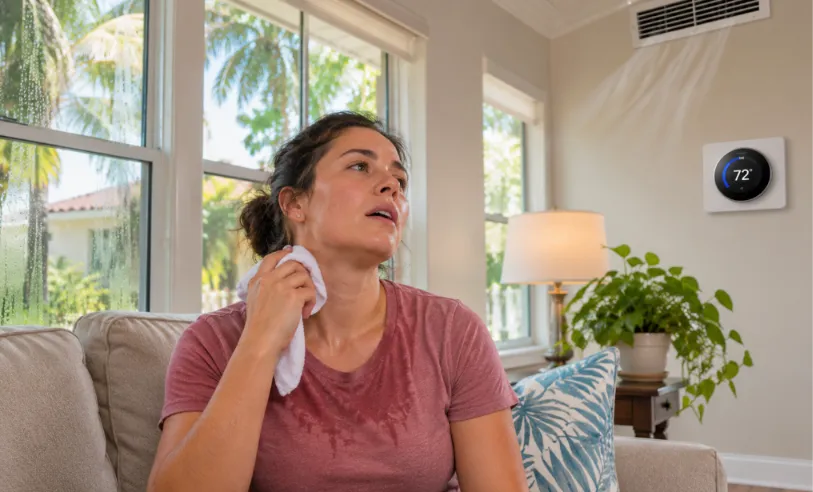
If your Oviedo house feels clammy while the air conditioner barely runs, the system is shutting off before it can dry the air. On mild, humid days it hits the set temperature fast. The coil never stays cold long enough to pull water out, so the moisture stays put.
You may notice towels that never dry or a musty smell in the hallway. Turning the thermostat down usually makes it worse. At R&A Industries in Oviedo, we start with the free fixes below and suggest equipment only when they fall short.
How an Air Conditioner Pulls Out Humidity
Your system cools and dries the air at the same coil. Warm, humid air passes over the cold indoor coil. Moisture forms on the fins, like water on a cold glass. It drips into a pan and leaves through the condensate line, the small pipe that drains outside.
Drying starts only after the coil has been cold for a few minutes. Long runs pull out a lot of water. Short bursts barely wet the coil before the system stops.
When the system stops, some water left on the coil can drift back into the house as vapor. So a short cycle cools the air a little, removes little water and may give part of it back. That is the clammy feeling.
Mild, Humid Days Bring the Clammy Feeling
In July, the heat keeps your system running almost nonstop, so it dries the house along the way. In November and March, Oviedo days turn mild while the air stays humid. That mix is where the trouble starts.
Your thermostat reads only temperature. On a 76-degree day, the house drops to 75 quickly and the system shuts off. Nothing in a standard setup knows the air still holds too much water.
Here in Central Florida, these mild, damp spells can last for weeks in late fall and again in spring. That is why a home that felt fine all summer can turn musty around Thanksgiving.
Five Causes Behind a Clammy House
Mild weather sets the stage, but most clammy homes also have one of these five problems. They start with the most common and end with the easiest to miss, and a house can have more than one.
An Oversized System
A system too big for the house cools it in minutes, then stops before the coil can dry the air. It feels strong, yet it cycles on and off all year. The effect is worst on mild days, when the house needs the least cooling.
The Fan Set to ON
With the thermostat fan on ON instead of AUTO, the blower keeps going between cooling cycles. Air sweeps over the wet coil and carries that water right back into your rooms. Moving the switch to AUTO costs nothing and often helps within days.
Single-Speed Equipment
Older single-speed systems run either full blast or not at all. Two-stage and variable-speed systems can run longer at low speed on mild days. That keeps the coil cold and dries the air without chilling the rooms you live in.
Leaky Return Ducts in the Attic
Most Oviedo homes sit on concrete slabs, so the ducts run through a hot, damp attic. A leak on the return side, the ducts that carry air back to the system, pulls attic air straight in. Your system then wastes its short runs on moisture it should never see.
Indoor Moisture With Nowhere to Go
Showers, cooking, laundry and even a large fish tank all add water to the air. If the bathroom and kitchen fans are weak or unused, that water stays inside. On mild days, a system that barely runs cannot clear it alone.
Each fix in this guide works one of three ways. It helps the system run longer at low speed, keeps damp air out or adds a separate way to dry the air.
Should You Just Turn the Thermostat Down?
Most people try this first, and it does make the system run longer. On a mild day, though, the house turns cold well before it turns dry. You end up in a sweater in Florida and still feel damp.
Cooler air holding the same water feels wetter, because its relative humidity rises. Cold supply vents can even sweat and drip onto the floor. A dripping vent means the house is too cold and too wet at once.
Fixing the cause works better than fighting the thermostat. That may be a fan setting. It may also be duct sealing, a thermostat that controls humidity or a dehumidifier that dries the house without extra cooling.
Fixes That Dry Out a Clammy House
The right fix depends on why the house is clammy. Try the free and low-cost changes first, then add equipment if the house still feels damp. Here is how each option works and which homes it suits.
| Fix | What it does | Best for |
|---|---|---|
| Fan set to AUTO | Stops the blower from blowing moisture back off the coil | Every home, as a first step |
| Humidity-control thermostat | Slows the blower so the system dries longer | Systems that support a dehumidify mode |
| Return duct sealing | Stops humid attic air from entering the system | Homes with ducts in the attic |
| Whole-home dehumidifier | Removes moisture without extra cooling | Homes that stay damp on mild days |
| Right-sized or variable-speed system | Runs longer at low speed | Homes due for a replacement |
A whole-house dehumidifier is a separate unit tied to your ducts. It watches humidity instead of temperature, so it can dry the house on a 75-degree day without making anyone cold. It is the best first piece of equipment when the system itself is in good shape.
How to Tell If Humidity Is the Problem
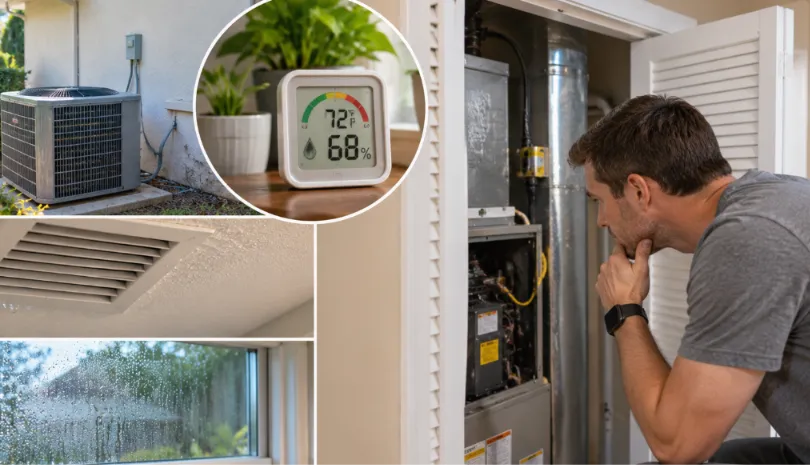
A clammy feeling can come from humidity, weak airflow or a system that is not cooling well. The EPA advises keeping indoor humidity below 60%, ideally between 30% and 50%. A hygrometer, a small humidity gauge from any hardware store, shows where you stand.
If the gauge stays above 60% for days, humidity is the cause. These signs point the same way, because each one comes from water building up indoors rather than a cooling fault.
- A musty smell hangs in closets, bathrooms or near the air handler.
- Water drops form on supply vents or around ceiling grilles.
- Towels, bedding and couches never feel fully dry.
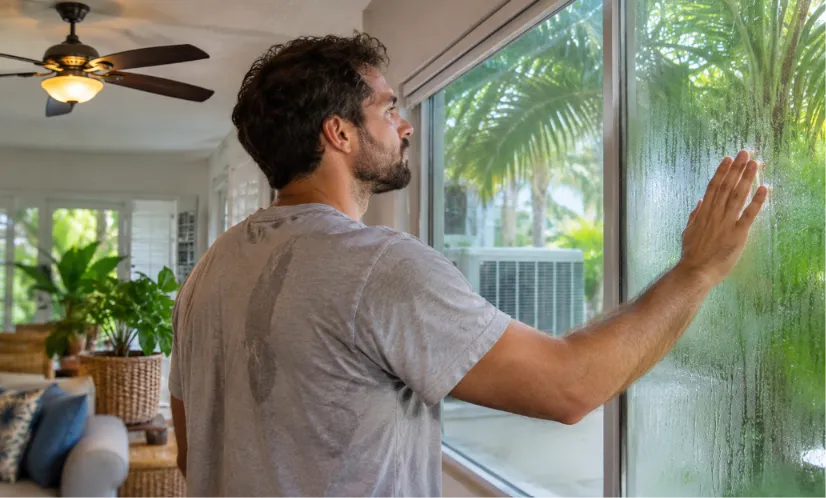
- Fog forms on the inside of windows on cool mornings.
- Small mold spots show up near vents or in bathroom corners.
When to Book an HVAC Inspection
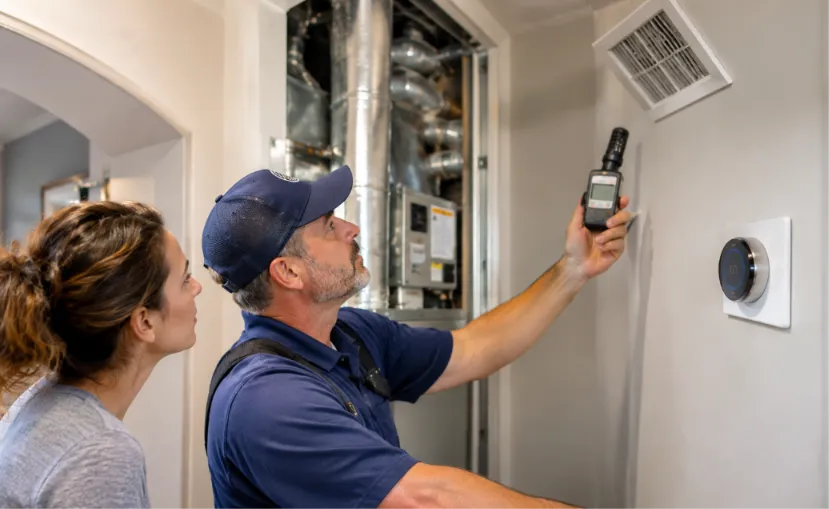
If switching the fan to AUTO does not help within a few days, look at the equipment or the ducts. An inspection checks how long the system runs and how much water it removes. It also shows whether attic air leaks into the return side.
During AC maintenance, we check the coil, the drain line, airflow and the refrigerant charge, the fluid that moves heat outdoors. Each one affects how well the system dries your air.
A drain line choked with slime can push water back toward the house. We clear it with a pro iFLO unit that feeds enzyme cleaner into the line. Then we fit ClearDrain, a zinc-infused PVC pipe that keeps the slime from coming back.
If the system is oversized or worn out, a right-sized replacement with two-stage or variable-speed operation fixes the root cause. Until then, a dehumidifier or a humidity-control thermostat keeps the house dry through Oviedo’s long, damp shoulder seasons.
Humidity Help From R&A Industries in Oviedo
A clammy house usually comes down to short runs, airflow or a leak in the ducts. We handle air conditioner repair, replacement and maintenance, along with duct sealing, whole-house dehumidifiers and drain line care. One visit can cover both the cause and the fix.
R&A Industries has been family-owned since 2001 and keeps HVAC, plumbing and electrical work under one roof. Florida license CAC1820213 covers every air conditioning job we take on. Our 4.9 stars rating on Google comes from Oviedo homeowners, and every town we serve appears on our service areas page.
Each home visit is one flat $120, covering the trip plus 30 minutes of work. Estimates on new systems and replacements are free. Maintenance plans start at $14.60 a month with two visits a year. Bigger jobs can be paid over time through Wisetack, based on your credit.
Want to know what is keeping your home damp? Book an inspection, and we will check the humidity and find the cause. Evenings and weekends, the same line rolls over to our answering service.
[Call (407) 384-0034]
Frequently Asked Questions
Why is my house humid even when the air conditioner runs for hours?
Long run times should dry the air, so lasting dampness points to a different fault. Low refrigerant keeps the coil too warm to pull out water. A blower set too fast moves air past the coil before water can form. A technician can test both on one visit.
Can a dirty filter or coil stop the air conditioner from removing humidity?
Yes. Dust on the coil acts like a blanket, so less water forms on the fins. A clogged filter slows airflow until the coil can freeze, and a frozen coil stops drying. Changing filters on schedule and a yearly coil cleaning keep the drying on track.
Does a bigger air conditioner remove more humidity?
No. Extra capacity usually means shorter runs and damper air. The right size comes from a room-by-room load calculation of windows, insulation and shade. The size of the old unit tells you little. A well-matched system runs longer, steadier cycles that leave the rooms drier.
Is a whole-house dehumidifier better than a portable one?
Usually, if the dampness reaches every room. A portable unit dries one room, needs its bucket emptied and puts out warm air. A whole-house unit works through your ducts, drains on its own and treats every room. Portable units still suit a single damp room or closet.
Should I run the air conditioner on mild winter days in Florida?
On a mild, muggy day, a short cooling run or a dehumidifier helps more than leaving the system off. A heat pump running in heat mode does not dry the air. If the house feels damp in January, check the humidity gauge before you reach for the heat.