Skip to content



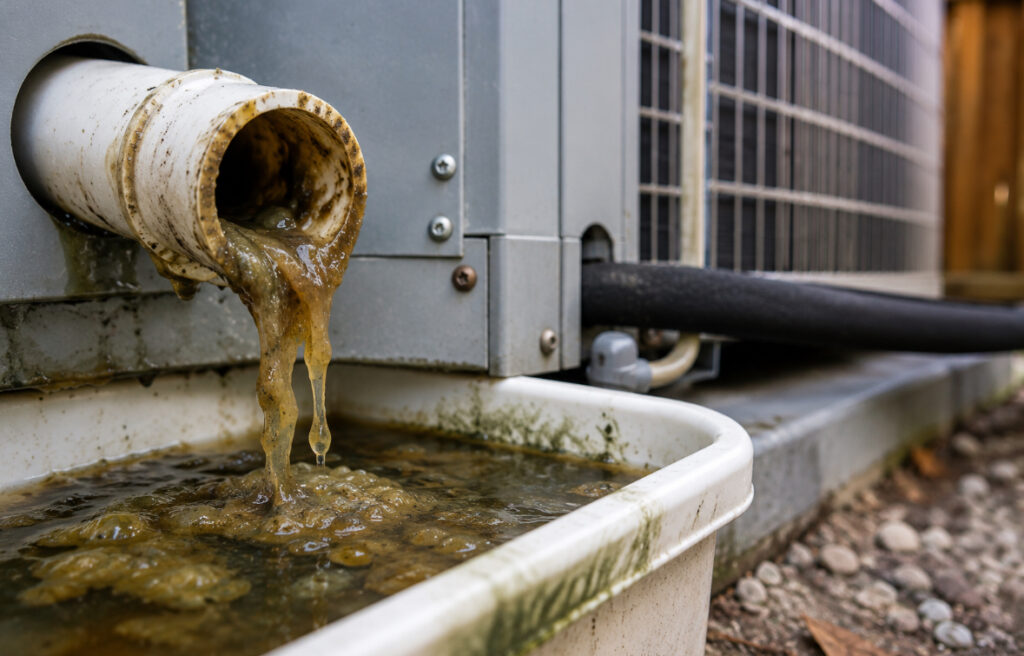
That dark, slimy buildup inside your air conditioner’s condensate drain line may look minor, but it is often the first sign of a larger HVAC problem. This substance, commonly called zooglea, is a gelatinous bacterial biofilm that forms when moisture, dust, and organic debris combine inside the drain system. Once established, it can restrict drainage, trigger system shutdowns, and even cause water damage around the air handler.
In Orlando, air conditioners remove several gallons of moisture from the air every day. That constant flow of warm condensate creates ideal conditions for zooglea growth inside 3/4-inch PVC drain lines, drain traps, and auxiliary pans. Read below to learn seven important reasons why this slime should never be ignored and how professional AC drain cleaning services can help prevent costly cooling and water damage problems.
What Zooglea Slime Is and Why It Forms in AC Condensate Drain Lines

Zooglea is a living bacterial colony protected by a sticky, gelatin-like matrix. In residential HVAC systems, it develops when dust, pollen, and organic particles washed from the evaporator coil mix with the constant moisture flowing through the condensate drain line.
What homeowners see at the cleanout opening or around the drain termination is usually only a small portion of the buildup. In many systems, the biofilm extends through the trap and several feet down the drain line, gradually narrowing the passage available for water to flow.
Common Places Zooglea Develops in HVAC Systems
| HVAC Component | Why Biofilm Forms There |
|---|---|
| Evaporator Coil Drain Pan | Warm standing water and organic debris |
| Condensate Trap | Slow-moving water allows slime to accumulate |
| PVC Drain Line | Constant moisture supports bacterial growth |
| Float Switch Chamber | Debris and slime can interfere with operation |
| Auxiliary Drain Pan | Overflow water creates additional buildup |
Because Orlando’s humidity keeps air conditioners running for much of the year, condensate drain systems are one of the most common locations where technicians encounter zooglea buildup.
Reason #1: Zooglea Restricts Condensate Drainage and Slows Water Flow
One of the earliest signs of zooglea buildup is water draining more slowly from the air handler. The slime coats the interior walls of the condensate line and acts like a sticky surface that traps dust, algae, and sediment. As the buildup thickens, the effective diameter of the drain line becomes smaller.
Even though the drain pipe is only about 3/4 inch wide, your air conditioner may remove several gallons of water on a humid summer day. It does not take much buildup to reduce flow enough for water to begin backing up into the drain pan.
Warning Signs of Restricted Condensate Flow
- Water in the Drain Pan: Condensate is not leaving the system fast enough.
- Slow Dripping Outside: The drain termination releases less water than usual.
- Musty Odors: Standing water encourages bacterial growth.
- Intermittent Shutdowns: Float switches may stop the system when water rises.
- Visible Slime: Dark buildup appears near the cleanout or drain outlet.
When drainage slows, the problem usually worsens quickly during periods of high humidity and continuous AC operation.
Reason #2: Persistent Musty Odors Often Begin Inside the Drain Line

If you notice a sour or musty smell when the air conditioner starts, the condensate drain system may be the source. As zooglea feeds on organic material, it releases gases that can travel through the air handler and into the duct system.
Many homeowners assume the odor is coming from the ductwork, but technicians frequently trace the smell back to bacterial growth inside the drain pan and condensate line. Surface cleaning may reduce the odor temporarily, but the smell often returns because the biofilm remains attached to the pipe walls.
Professional cleaning of the condensate system removes the source of the odor rather than simply masking it.
Reason #3: Condensate Drain Clogs Can Shut Down the Entire Air Conditioner
Modern HVAC systems are commonly equipped with float safety switches designed to prevent water damage. When the condensate drain line becomes partially or fully blocked, water rises in the drain pan and activates the switch, shutting the air conditioner off automatically.
From the homeowner’s perspective, it may appear that the AC has failed unexpectedly, even though the real problem is a clogged drain line. This is one of the most common no-cooling service calls during Orlando’s most humid months.
What Homeowners Often Notice
- The thermostat is calling for cooling, but the system will not start.
- Water is visible around the indoor air handler.
- The drain pan is full.
- The system begins working again after the water level drops.
- The shutdown happens repeatedly during periods of heavy AC use.
In many cases, prompt AC drain cleaning and HVAC maintenance can restore proper drainage and prevent repeated shutdowns.
Reason #4: Overflowing Drain Pans Can Cause Costly Water Damage

When a condensate drain line becomes blocked with zooglea, the excess water has nowhere to go. It begins collecting in the primary drain pan and eventually spills into the auxiliary pan or overflows into surrounding areas. In homes with attic-mounted air handlers, this can lead to stained ceilings, damaged drywall, saturated insulation, and warped wood framing.
What makes this issue especially frustrating is that the air conditioner may still appear to be working normally until visible water damage begins to show. By the time a homeowner notices a ceiling stain or damp insulation, the drain line may have been partially restricted for weeks. Addressing zooglea buildup early helps prevent both unexpected system shutdowns and costly repairs to the home.
Reason #5: Constant Moisture Encourages Mold and Poor Indoor Air Quality
A clogged condensate drain does more than interfere with water removal. When zooglea traps moisture inside the drain pan and piping, it creates a persistently damp environment around one of the most sensitive parts of the HVAC system. In Orlando’s warm and humid climate, those conditions can quickly contribute to microbial growth and musty odors.
Because the evaporator coil and blower circulate air throughout the home, any contamination near the drain system can affect the air you breathe. Homeowners often notice that the house smells stale when the AC starts, even though the temperature appears normal.
Common Indoor Air Quality Effects
- Musty Odors: Damp organic buildup produces stale smells that are carried through the duct system.
- Mold Growth: Moisture around the air handler can support microbial development.
- Allergy Irritation: Airborne particles may aggravate sneezing, coughing, and respiratory discomfort.
- Persistent Stale Air: The home may feel less fresh despite continuous cooling.
If unpleasant odors or allergy symptoms continue returning, the condensate drain system may be contributing more to the problem than many homeowners realize.
Reason #6: Hidden Moisture Can Damage the Air Handler and Surrounding Materials
When condensate cannot drain freely, water often remains in contact with metal components and building materials for extended periods. This constant moisture exposure can gradually damage both the air conditioning equipment and the areas surrounding it.
In attic-mounted systems, technicians frequently find rusted drain pans, saturated insulation, and ceiling stains caused by drain restrictions that went unnoticed for weeks. What begins as a small layer of slime inside the drain line can eventually lead to repairs involving drywall, insulation, and structural materials.
Areas Commonly Affected by Condensate Overflows
| Component or Area | Potential Damage |
|---|---|
| Primary Drain Pan | Rust and eventual leakage |
| Float Switch Assembly | Intermittent or repeated shutdowns |
| Air Handler Cabinet | Corrosion and deterioration |
| Attic Insulation | Moisture saturation and reduced effectiveness |
| Drywall and Ceilings | Water stains and structural damage |
Because these issues often develop slowly, many homeowners are unaware of the problem until visible water damage appears.
Reason #7: Chemical Drain Treatments Rarely Remove the Entire Biofilm

Many homeowners attempt to solve condensate drain clogs by pouring bleach or chemical cleaners into the line. While these products may temporarily improve drainage, they usually treat only the surface of the buildup rather than removing the entire zooglea colony attached to the pipe walls.
The biofilm forms a protective matrix that allows bacteria to survive and regrow quickly. As a result, the slime often returns within a few weeks, especially during Orlando’s long cooling season when moisture is constantly flowing through the drain system.
Why Professional Cleaning Provides Longer-Lasting Results
- Complete Removal: High-pressure cleaning clears the full circumference of the drain line.
- Improved Drainage: Water flows freely through the trap and piping.
- Odor Reduction: Eliminating the biofilm removes the source of musty smells.
- Lower Shutdown Risk: Clean drains reduce float-switch interruptions.
- Longer-Term Protection: Thorough cleaning helps prevent rapid regrowth.
If zooglea keeps returning despite repeated DIY treatments, the most effective next step is to work with an experienced HVAC contractor who can remove the buildup completely and identify why it developed in the first place.
Why Choose R&A Industries for AC Drain Cleaning in Orlando, FL
Zooglea slime inside your condensate drain line is a clear warning that moisture and organic buildup are affecting your air conditioning system. Left untreated, it can lead to musty odors, repeated AC shutdowns, water damage, and ongoing comfort problems.
Since 2001, R&A Industries has helped homeowners throughout Orlando and Central Florida solve recurring condensate and drainage issues. Our experienced technicians provide professional drain cleaning services, advanced hydro jetting services, and thorough diagnostics to remove zooglea from AC drain lines and restore dependable drainage. By identifying the conditions that allow biofilm to return, we help protect both your cooling system and your home from future moisture-related problems.